Category: Uncategorized

  • Survival Is Still Worthy Of Being Seen

    Survival Is Still Worthy Of Being Seen

    I do write about light moments too. The laughter, the softness, the ordinary things that still matter. They are part of me just as much as the harder things are. I think that matters to say, because sometimes I worry my writing may seem too heavy to people looking in from the outside.

    But this blog was never created to perform happiness or to dress pain up in something more comfortable for other people to read. It was created to be honest. To tell the truth about what life looks like when you have lived through abuse, addiction, and the long aftermath of both. Not every day is dark. Not every post is painful. But survival is not neat, and it is not always inspiring in the way people like to package it. Sometimes it is messy. Sometimes it is exhausting. Sometimes it is simply getting through.

    I understand what this space is. It is not just a collection of hard memories or heavy thoughts. It is the survival of someone who has suffered, and who is still here. It is the proof that even with all that life has taken, there can still be warmth, humour, tenderness, and light. Those moments do not erase the struggle. They sit beside it.

    I do not write to be negative. I write to be truthful. And I know there is value in that truth, especially for the people who may need to see that survival does not have to look polished to be real.

    Survival is not always pretty, but it is still worthy of being seen.

  • Finding My Spark Again

    Finding My Spark Again

    I was told I’d lost my spark.

    The words sat there between us, heavy and undeniable. And the truth is, they were right. I have lost my spark.

    Not in the obvious way, perhaps. I am not outwardly miserable. I am not the person people would necessarily point to and say she is falling apart. I can still smile. I can still laugh. I can still hold a conversation and make myself appear intact. But inside me, there is turmoil running through every vein. A constant unrest. A heaviness that rarely loosens its grip.

    I keep most of it in.

    It spills out here instead, into my writing, because this is the safest place I know to be honest. I can pour my worst fears onto a page, lay my pain down in words, and for a little while it leaves me. Or at least becomes quiet enough for me to breathe.

    If you met me, you would see that I do have a personality. Even writing that feels uncomfortable because I have no real ego to cushion me. Speaking well of myself feels awkward, almost embarrassing. But it is still true. I can laugh. I can care. I can sit with someone for hours if they need comfort. I can help an elderly lady reach the top shelf in a shop, balancing on my tiptoes as if I am far taller than I really am. I can help a flustered woman at a petrol station open the petrol cap when she has borrowed her husband’s car and cannot work it out. I can carry the weight of eight children’s needs, emotions, chaos and endless mess, and still somehow keep everything moving.

    If I see someone struggling, I stop.

    If someone needs kindness, I give it.

    I can play video games to a decent standard for a 45 year old mam. I can snipe on Call of Duty. I can edit montages on Premiere Pro. I am down to earth. I can crack a joke. I can make my kids cringe at my humour, and although they would never willingly admit it, my jokes are funny. I enjoy a bit of harmless sarcasm. My empathy floods me more than it should sometimes, but I would still rather be too soft than too hard.

    But trust is gone.

    Some things happen in life that strip trust from you so completely that it never grows back the same. Since last year, I have known that something in me has changed for good. I do not trust. I do not believe I ever fully will again. So I stay alone, in my own company, where disappointment cannot walk through the door wearing a familiar face.

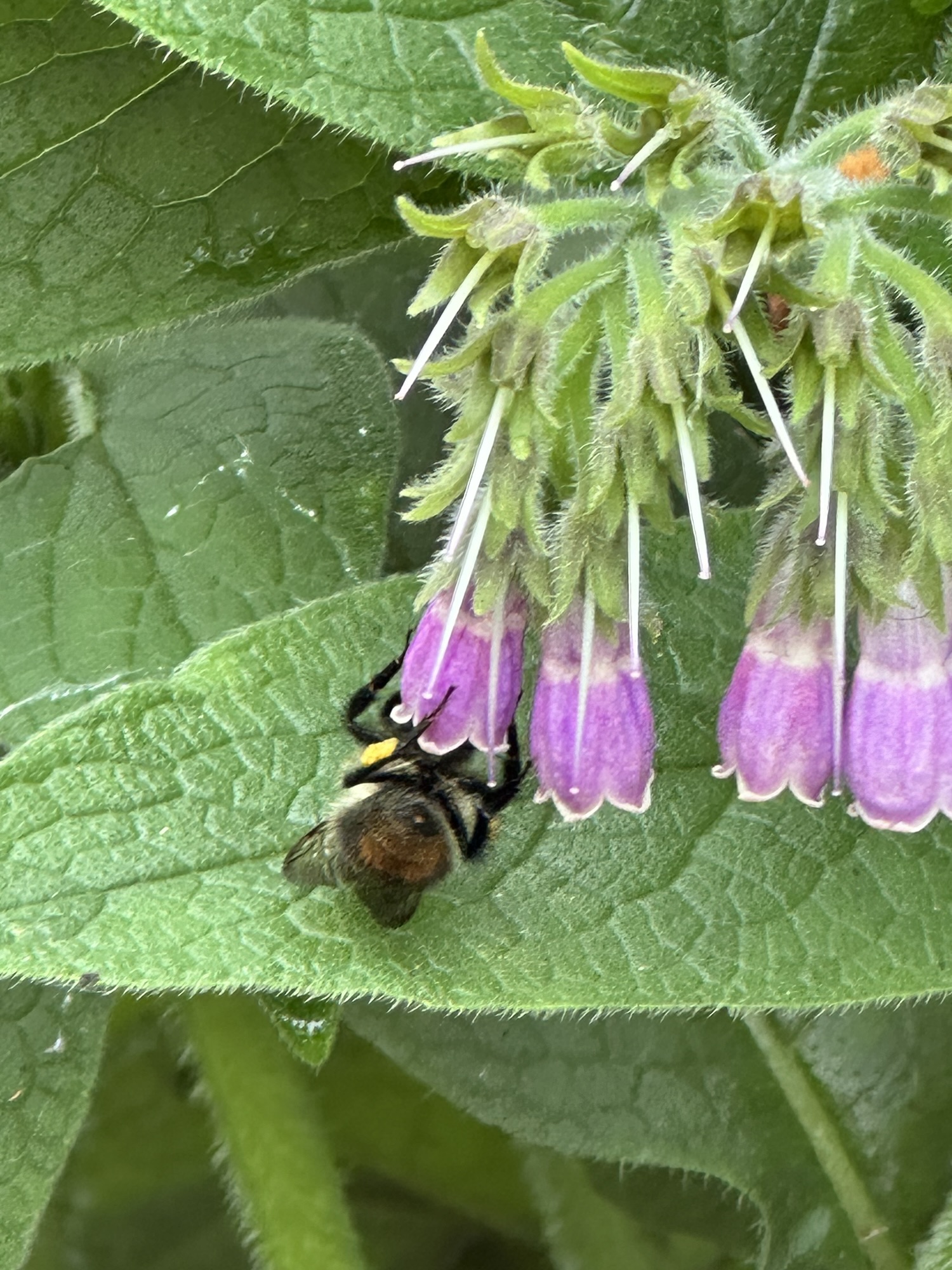
    There was a time, about eighteen months ago, when I would go out walking and take photographs of everything beautiful. Flowers. Bees. The river. The sun. The moon. The trees. The clouds stretching themselves across the sky as though they had all the time in the world. I noticed things then. I felt pulled towards them.

    Then I stopped.

    And maybe that is what losing your spark looks like. Not becoming someone else entirely, but slowly ceasing to reach for the things that once lit you up. Quietly drifting away from what made you feel something. Letting life harden around you until wonder no longer feels natural.

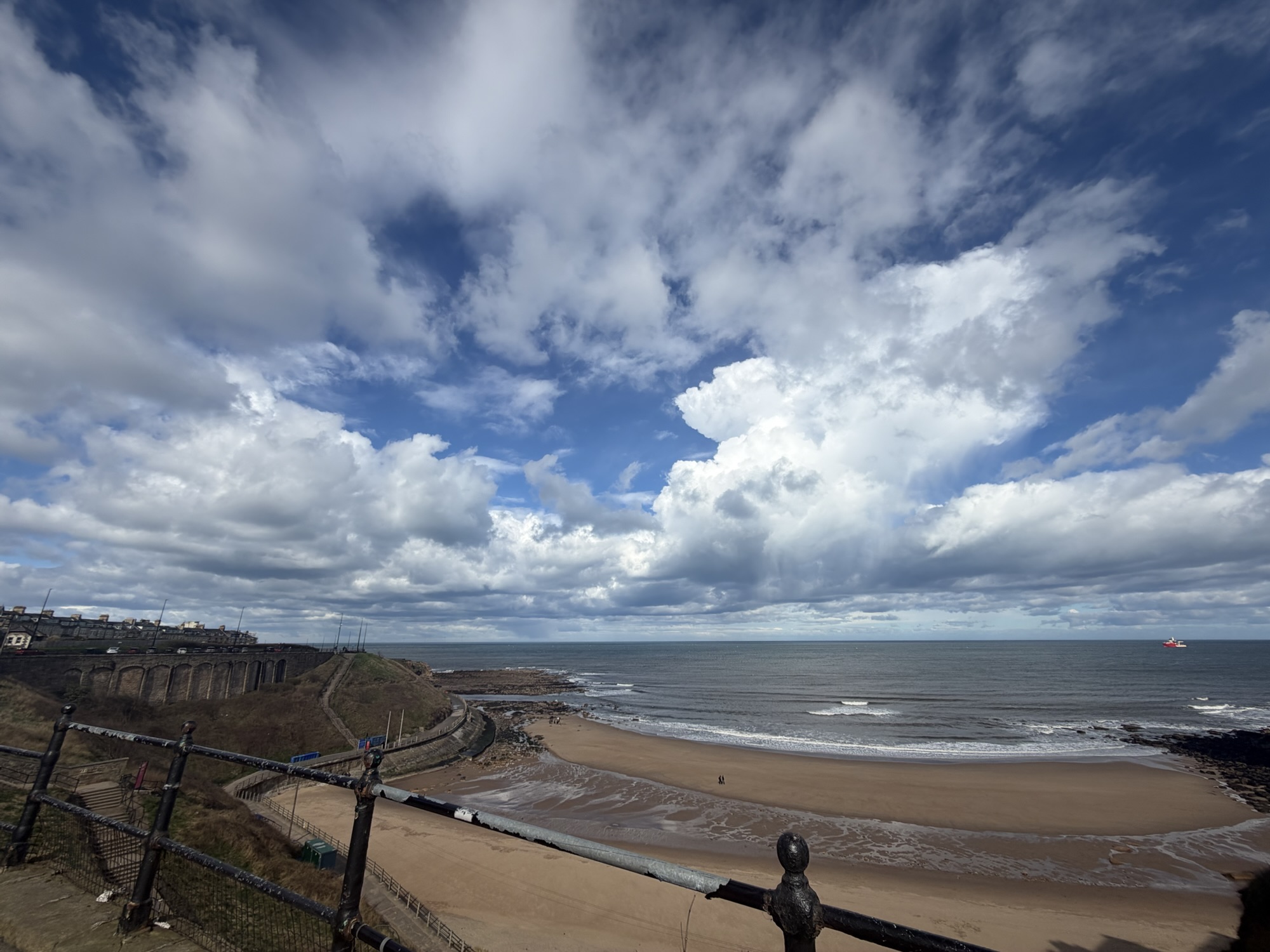
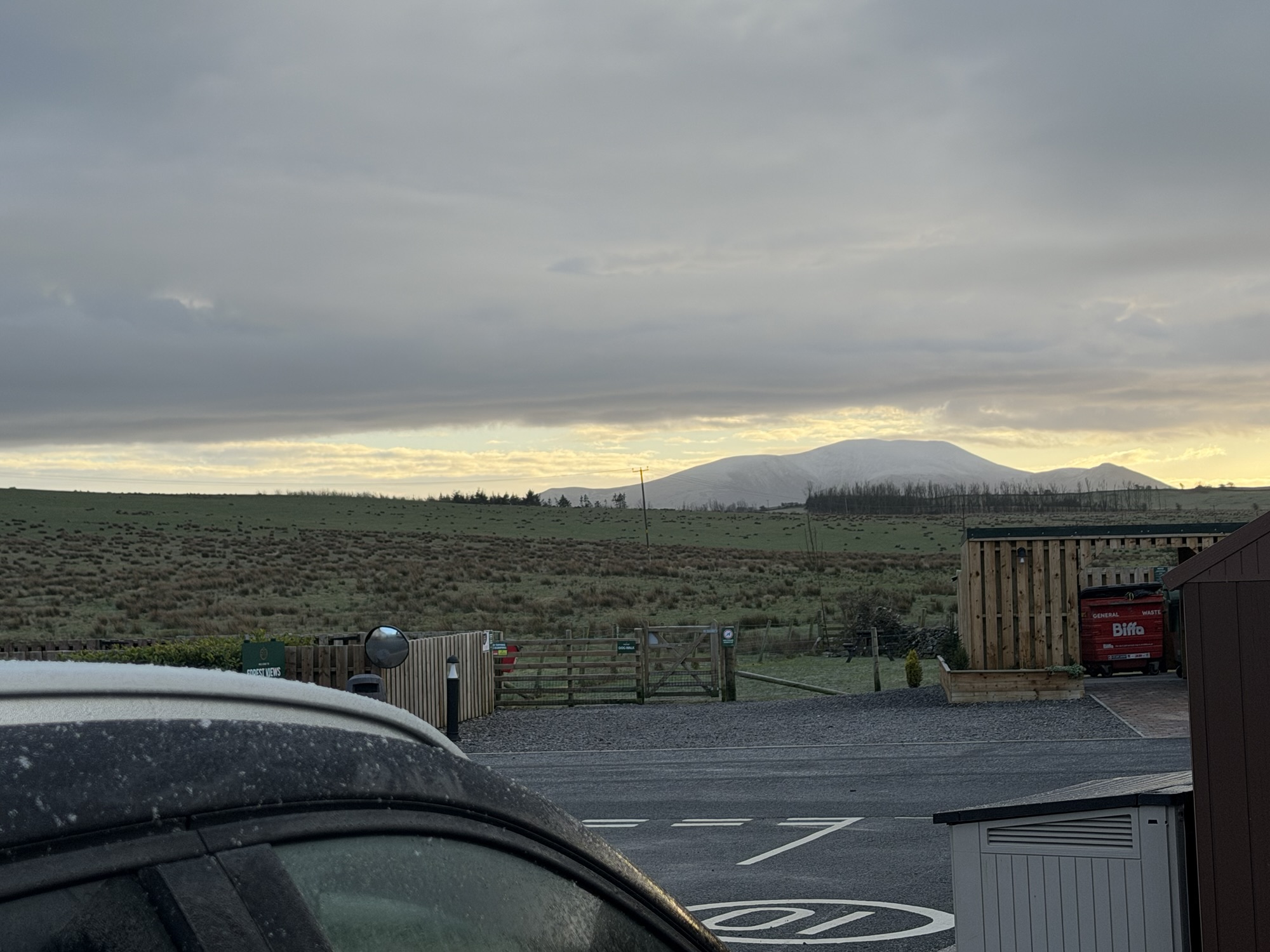
    But today I took photographs of the clouds.

    And they mesmerised me.

    That has to mean something.

    Maybe I did not lose my spark at all. Maybe it was only dulled. Worn down by years of pain, by things that should never have happened, by the sort of hurt that changes the way you move through the world. And then, just as I was already carrying enough, I was retraumatised by someone I had believed I could trust.

    That kind of pain does not just bruise you.

    It alters you.

    But sparks fade. They do not disappear.

    I need to believe that now. I need to believe that there is still something in me worth finding again. I need to start looking for beauty in small things. I need to let myself enjoy gaming not as a distraction alone, but as something that genuinely brings me joy. I need to make the TikToks again. Edit the videos. Learn new things. Build something from the skills I do have. Not for clicks. Not for likes. But for the feeling. For the small flicker of pride. For the sense of purpose. For the reminder that I am still here.

    Gaming brings me joy. It always has. My competitive side wants to improve, to sharpen, to keep going. Editing gives me something to focus on, something to shape, something I can make mine. Creation matters. It reminds you that even when life has taken so much, it has not taken everything.

    I do not naturally believe I am talented. I can say I am a good mam, but even that I downplay because it feels easier to minimise myself than to stand fully in anything good. But I have written a book and self published it. I have another one in progress, this time fiction. That must count for something. It has to.

    What I need now is belief.

    Motivation.

    Desire.

    A reason to keep reaching.

    Because the truth is, I have never really had anyone in life who believed in me in the way people should be believed in. I have had to become my own cheerleader, my own comfort, my own support system. And that is hard when your faith in yourself has been chipped away over years and years.

    But maybe this is where it starts again.

    Not with a miracle.

    Not with some grand transformation.

    Just with a photograph of the clouds.

    Just with a small return to wonder.

    Just with the quiet decision to believe that something in me is still glowing beneath it all.

    Maybe I have not lost my spark.

    Maybe I am only learning how to find it again.

  • You Can Just See The Love

    You Can Just See The Love

    Do I believe there are days when you need something, need to hear something that helps you?

    God yes. Today was one of those days.

    I took my four younger boys to the beach. We devoured fish and chips, ice cream, and time together. No pressure to do anything extraordinary, just the quiet beauty of being with each other. Talking, listening, relaxing beneath the burning sun. It felt like a pause from everyday life, a breath of something lighter.

    We were sat on a bench. I closed my eyes and let the sun wash over me. One of my sons stood behind me and began to massage my shoulders whilst the others sat talking beside us. Then a lady approached. She looked to be in her early sixties. She asked, “Are all of these your boys?”

    I smiled and said yes, they were.

    Her expression was soft, warm, reassuring. There was no judgement in it, no edge, no slyness. So I told her I had another three sons and a daughter too, but that they were all adults. She smiled and said, “Oh, that’s absolutely lovely.”

    And it was one of those small moments that did not feel small at all.

    No judgement. No nasty comment. No assumption. Just kindness.

    Then she said the very thing I think I needed most to hear.

    “You can just see the love between you.”

    And it filled my heart.

    Because I can feel the love I have for my children. It lives in every part of me. They are my reason for living, my hope, my resilience, my determination, all wrapped into one. I like to think my love is plain to see, and after the week I had had, her words were far more than a passing comment. They reached somewhere deep.

    My youngest son had been in hospital just days before, for four days. I had rung an ambulance the Wednesday afternoon because he was seriously unwell. After twelve long hours in A&E, with numerous tests, he was admitted to the children’s ward at the RVI and placed on intravenous antibiotics.

    I did not leave his side.

    When my children are poorly, nothing else matters. There is no other focus in me but them. But those twelve hours in A&E were mentally exhausting. I had reached twenty four hours without alcohol, and I knew withdrawals were likely going to become part of the problem. I told the nurse that I had issues with alcohol and that I was under services for help. Other than sweating profusely and feeling my anxiety climb higher than usual, I did not expect much else. So I rode it out that night.

    They offered for me to check into A&E myself so they could prescribe something to help. I refused. I would not leave my little boy.

    People see alcoholics as selfish. But even in the grip of addiction, I am not selfish. My instinct is still to put my children, and everyone else, before myself. I cannot not do that.

    Whilst we were on the ward, a nurse made an internal safeguarding referral. I was never informed of it and only read it in the paperwork when my son was discharged four days later. But clearly, they saw that my parenting was not in question, and that the care my son received from me was unwavering.

    My children adore me. They tell me often that they do not know what they would do without me, without me being the one who picks up the pieces and solves the problems. It is not a superpower. To me, it is the bare minimum of what a mam should be.

    Alcohol or no alcohol, I will always put them first.

    They are my entire life. My soul. My heartbeat.

    And yet sometimes, I do wonder if there is something almost supernatural in the way I feel them. There are moments where, minutes before one of my sons rings me, I already know something is wrong. I feel it. I have some kind of inbuilt radar that alerts me to danger, hurt, illness, or trouble without any obvious clue at all. I do not know if there is a name for it, or whether it is a recognised phenomenon, but I know it is real. It has happened too many times not to be. I have woken moments before one of them has come into the house, or moments before they have woken and told me they were unwell.

    So when I heard those words from that lovely woman, they stirred something in me. Pride. Warmth. A quiet ache too.

    Because I do adore my children.

    They want for nothing material, but more importantly, they want for nothing emotionally. And maybe that is why, by the end of the day, I have so little left for myself. When you spend your life pouring into others, your own cup can sit empty for a very long time.

    Would I change that?

    No.

    Because I believe my purpose on this earth is to be a mam. To do all I can to make sure my children reach adulthood with a solid foundation, with emotional safety, with regulation, and with the deep knowing that they are loved unconditionally.

    Things I never had.

    It takes courage, strength, and bravery to break the chains of abuse and generational trauma. And whilst I have no ego in saying it, I know this much is true. I have only ever wanted to give love, even though I received so little of it myself.

    Because passing my pain down to my children may have been easier on my own wounded mind, but it would have destroyed me much sooner.

    And maybe that is what healing really looks like, love given freely where pain once lived.

  • I Want To Know But Not At The Cost Of Knowing

    I Want To Know But Not At The Cost Of Knowing

    Friday was a strange day. At short notice, I got an appointment for the long Covid clinic, something I had almost forgotten about. My GP referred me last year.

    I have suffered from the effects of an Omicron Covid infection since December 2022. The infection itself was not bad. Two days and I was over it. But the after effects wreaked havoc on my body. I can only presume it attacked my central nervous system, damaging key regulators such as the vagus nerve.

    But advocating for yourself does not mean you are going to be believed or understood. I always knew it would be a battle if I ever found the courage to face the brutality of the crippling after effects I have been left with.

    My body is not the same. I do not even know where to begin in trying to explain how severe the symptoms are. And yet I know trying to get a doctor to listen might be even harder. Especially when self advocacy is alien to me.

    Initially, for eight months, I was bedbound. I experienced horrific POTS type symptoms, a racing heart when I stood up with no relief, air hunger, adrenaline dumps. I lay on my bed twitching, unable to talk, unable to regulate my breathing, feeling like I was dying, my body reacting to some unseen trigger. The psychological effect of that was horrific. But the symptoms were real. The feelings were real. There was nothing psychological about lying there with no escape from the hell of severe panic triggered by nothing, several times a day, for hours at a time.

    My body forgot how to breathe. I was winded just by sitting up. It was as though my body would no longer let air in the way it used to. And there was so much more. The desperate need to swallow constantly. A numbness in the back of my throat. The feeling that my tongue was too big for my mouth and not knowing where to put it. The sensation that my throat was closing. The constant unconscious, forced need to tighten throat muscles just so the feeling of dying between each breath would subside. Feelings that lasted all day. Not being able to breathe through my nose with any satisfaction. Everything feels different now. My body is not working how it should.

    And then came this appointment, where I had to advocate for myself. I had to tell this doctor that I was not uneducated, that regardless of my complicated mental health difficulties and my alcohol addiction, I am still insightful, accountable and capable of understanding my own health and the things preventing me from feeling normal.

    On Friday I sat with that doctor and he spoke, but he also let me speak, for one hour and twenty minutes. He gave me the time and the space to explain things. To be open and honest about how Covid had damaged my body, and how there were clearly psychological issues at play too.

    We laughed, and I became teary at times. I try to joke about my broken body, about being scared of my own shadow. I mock myself to show humility rather than accept that perhaps things have never been good, and that being gentler with myself might help. But I cannot do it. I cannot accept that I deserve kindness. I cannot accept that I deserve love. I cannot accept that I deserve self love. If I dared to love myself, I think I would break even more, because how do you show yourself tenderness when you have never believed you deserve it?

    I went through my history. My childhood, my poor mental health, and my current health in relation to long Covid. He joked that his job was to catastrophise, and I already believed the catastrophe before it had even happened. He knew his words would cut through me like a screeching child in a silent room.

    He wanted a full panel of bloods, looking further than the basics. He wanted inflammation markers, coagulation tests, hepatitis B, hepatitis C. He reeled them off one by one. Then he wanted a chest X ray and an ECG.

    I am certain he knew what my reaction would be after the long conversation we had just had. I told him I would find it impossible. Which sounds so crazy. In my head I knew there was no chance I would be able to go through with those tests. I want to know, but not at the cost of knowing. Where does that even come from?

    The truth is, I do want to know if I am ‘dying’. But I also feel it is better for me not to know. The doctor felt it would be more harmful to me to have the tests done than not to do them. Instead, he is referring me onto a psychological long Covid pathway, where I will work with a therapist in the hope of slowly reaching a place where I can tolerate the tests I currently cannot bear.

    And this is where my humiliation cuts deep. From the youngest of ages, my parents manipulated a narrative they wanted me to believe and accept. My mam wanted me to know that there was something wrong with me. From as early as I can remember, she would tell me there was something wrong with me. Then she built on it. As a young child I began to get severe headaches, and this was accompanied by severe sickness. She told the doctor she believed I was allergic to chocolate. I believed her. Until after I ran away and decided to test the theory. It took every ounce of resolve to stand in a doorway after eating a Kit Kat, at the age of 18, taking the smallest bites, waiting to see if I would throw up, waiting for my stomach to turn.

    It did not. I was not sick.

    She told me I had a spot on my head and neck and that it meant I had a brain tumour. There was no joking. No playful teasing. She meant every word. I would stand in front of her mirror. She would analyse my body and with each spot she found the escalation of her diagnosis would mount. It became the norm. She would tell me incessantly, yet she would not take me to the doctor.

    But why was I so sick as a child? The answer may never be proven, and it would be dangerous to say fully what I believe. But I was sick for a reason, and my mam was the only person who had access to what I ingested.

    My dad reemphasised the fear around health. I would hear things like if you are nipped you will get cancer and die. If you go outside without me, you will die. My mam would tell me not to eat apple pips because I would get appendicitis and die. If I took medicine I would die. I was suffocated by the words. I was suffocated by fear that lodged itself into every part of my life.

    Eating became immensely hard. My parents diatribe of constant fear. They would make me chew and over chew, they threatened that I’d choke if I didn’t eat so precariously. Each mouthful was painful. I would feel overwhelmingly nauseous, and every attempt to swallow took careful timing and accuracy just to avoid the dread. My mam would cook food and force it upon me that carried further choking hazards. It was as if she readied me for battle. Fish with bones was a favourite. I was sucked into a vacuum of fear, daily, constantly. There was never any sense that I could be fixed. In my world, you were either fine or you died.

    I do not believe that I was or am fixable.

    I cannot face those tests because if there is something wrong, in my head, then to me it means I am dead. And if there is something wrong, it also means my mam was right. It means there was something wrong with me all along. How do I ever recover from knowing she was right after all the heinous things she has done?

    So the shame of carrying what my parents brainwashed into me lies beneath everything I do. The fear never fades. Their words never fade. I am a prisoner to the persistent, constant voices of my parents, the ones you trust because you have to trust them as a child, because at that time they are all you have.

    I know some people will read this and think I am no longer with my parents, so why does it still have such power over me. But that is the point. Trauma like this does not stay politely in the past. It changes the architecture of your mind. It settles into your body, your instincts, your reactions, your beliefs. My parents did not just frighten me. They taught me to distrust my body, to fear illness, to expect catastrophe and to believe I was never safe. I may have left them, but the system they built inside me did not leave with them.

    And whilst there is rational within me. The overbearing, all consuming fact remains that they formed my entire sense of self and only by rebuilding that can my thought process fully be eradicated and rebuilt.

    And maybe that is the cruelest part of all, that even now, their fear still speaks through my body louder than my own voice ever learned to.

  • The Problem With praising Resilience

    The Problem With praising Resilience

    I believe resilience matters. I believe we should learn it young, in the ordinary, everyday disappointments of life. In things going wrong. In plans falling apart. In the sting of unkindness. In all the smaller troubles that teach us how to bend without breaking. These moments can shape us positively. They can teach us perspective, endurance and the ability to keep going without collapsing under every minor weight.

    But there is a kind of resilience that asks too much.

    There comes a point where resilience is no longer a healthy strength, but a survival response to what should never have happened. It stops being admirable and starts looking like conditioning. Like a person being taught to absorb cruelty, injustice and pain simply because life has given them no other option.

    That is not something to celebrate.

    To ask a person to be resilient in the face of profound harm, abuse or unforgivable acts is not wisdom. It is unfairness dressed up as praise. Yes, resilience may still emerge, because people are remarkable in the ways the survive. But survival should never be mistaken for consent. Endurance should never be confused with proof that the suffering was somehow bearable.

    Why do we ask so much of the harmed?

    Why do we speak so reverently of resilience, yet so softly of accountability?

    Why do we expect people to carry what was done to them with grace, instead of turning our outrage towards those who caused the damage?

    Resilience is not always the answer. Sometimes justice is. Sometimes protection is. Sometimes prevention is. Sometimes the real failure is not that someone struggled to recover, but that they were ever placed in a position where such recovery was needed at all.

    There are some things in life no one should have to become resilient to.

    And perhaps that is the truth we need to learn.

  • The Ordinary Things

    The Ordinary Things

    I had to come home and write immediately.

    I picked up my two youngest from primary school and asked, as I always do, how their day had been. My ten year old, who has that wonderful kind of honesty that arrives wrapped in unintentional comedy, told me his day had been bad. He said he was “going through it.”

    Curious about what could have weighed so heavily on ten year old shoulders, I gently asked a little more. He told me he was not talking about it. Not wanting to push or pry, I said that was okay, that he did not have to, but that I was here if he wanted to.

    Within seconds, he told me anyway.

    They had done puberty at school and it had completely freaked him out.

    A smile quietly formed at the corners of my mouth. As he launched into graphic details, fears, and utter disbelief about what the future might hold, I felt something inside me loosen. A small shaft of light through the ordinary. A moment of relief dressed up as school run conversation.

    I reassured him that he would be okay, that all of it was normal, that growing does not ask our permission before it arrives. Still, I could not help but laugh to myself. Here was a child who can play horror games for fun without so much as a flicker, yet one lesson on the birds and the bees had left him utterly shaken.

    I love my children in that deep, daily way words never quite hold properly. They make me smile, yes, but more than that, they make my heart smile. They are often the pause I do not know I need, the breath between heavier things, the soft return to joy when life has felt too loud.

    Sometimes it is not the grand moments that save us, but the quiet, ordinary ones that remind us we are still alive inside them.

  • Surviving March

    Surviving March

    Content warning: This post contains references to childhood abuse and trauma.

    The thing I wish most in the world is that people could understand how it feels.

    Not to judge. Not to dismiss. Not to offer easy solutions. Just to listen and understand.

    I wish my words and emotions could show people how hard it really is just to breathe sometimes.

    I wish I was not seen as inferior because of my “issues”. Above all I wish I did not feel like this at all. Because if I did not, there would be no need to explain why functioning in this world can be so difficult.

    It should not be about people needing to understand. It should be about me being able to cope and cope well.

    But we should also live in a world that recognises that not everyone is okay and that looking down on people or casting judgement is as unhelpful as it is cruel.

    The older I get, the harder my mental health becomes to manage.

    Perhaps youth has advantages. When you are young there is a resilience that keeps your head above water. There is energy that fades as age slowly creeps in. There are fewer expectations and responsibilities pressing down from every direction.

    Maybe with age that energy simply disappears. Maybe the strength it once took to suppress everything has finally exhausted itself.

    Or maybe being a mam to eight children and being the face of positivity, encouragement and strength has taken a toll on the parts of me that can no longer hide.

    Because for me, as long as my children have love, affection, warmth and hope, then I have done at least one thing right in this world.

    But the truth is I am struggling more now than ever.

    Breathing itself can feel difficult.

    It is anxiety that never stops. Twenty four hours a day. Seven days a week.

    A constant panic that never dulls or fades.

    Every breath can feel like it might be my last. Doctors might call it somatic OCD, but labels do not capture the reality of living with a constant sense of doom sitting in your chest and stomach. The physical symptoms often overpower any ability to simply push through.

    I am actually an easy going person by nature. Laid back. Accepting. I rarely complain about the everyday things people often become frustrated by.

    But trauma lives in places most people never see.

    The ping of a microwave can send panic through me.

    Standing near a cooker fills me with fear. Not because of the pain of burns, but because of the memories. As a child my mam would burn hidden parts of my body.

    Closed rooms frighten me, even in my own home.

    Baths terrify me because as a child my mam would hold my head under water until the very last moment. Until the fight drained out of me and only then would she release me and I would gasp desperately for air.

    Even drinking a simple glass of water is difficult. As soon as the cup reaches my lips my body panics for breath.

    I keep trying. I never give up trying. But my body feels stuck in trauma mode.

    All the understanding in the world cannot always break the chains of physical memory.

    And then there is the weather.

    The sky.

    The smell in the air.

    The subtle shift of seasons.

    Things most people barely notice can send waves of panic through me because they are tied to memories my body never forgot.

    And then there is March.

    March is a cruel month for me.

    One that traps me inside memories created by something horrific my mother did.

    My medical records even show it. Every year my mental health spirals during this time. I did not even realise the pattern myself until years later and saw it written clearly in my notes.

    I had always believed I was simply falling into random depressions. But with age, therapy and understanding comes painful realisation of how trauma stores itself inside the body.

    I hate saying what happened out loud. I have only managed to speak about it twice in therapy.

    But this blog is the only safe space I really have.

    And as March begins I can already feel the shift inside me. The fear building. My best friend worrying about how I will survive the next four weeks.

    Today I am lying in bed writing this while my children are at school or work. After the school run I had no strength left to remain up.

    The sky outside is the same sky from that memory.

    And I cannot bear to look at it.

    March 1996.

    I was fifteen.

    Naive. Not street wise. A child who already knew far more about pain than any child ever should.

    In our kitchen my mam kept a calendar. Each month she circled the day my period began. My initial sat inside the circle like some kind of trophy she had claimed.

    It filled me with shame just looking at it.

    But I never questioned it. Questioning her was dangerous.

    That March there was no circle.

    She was angry.

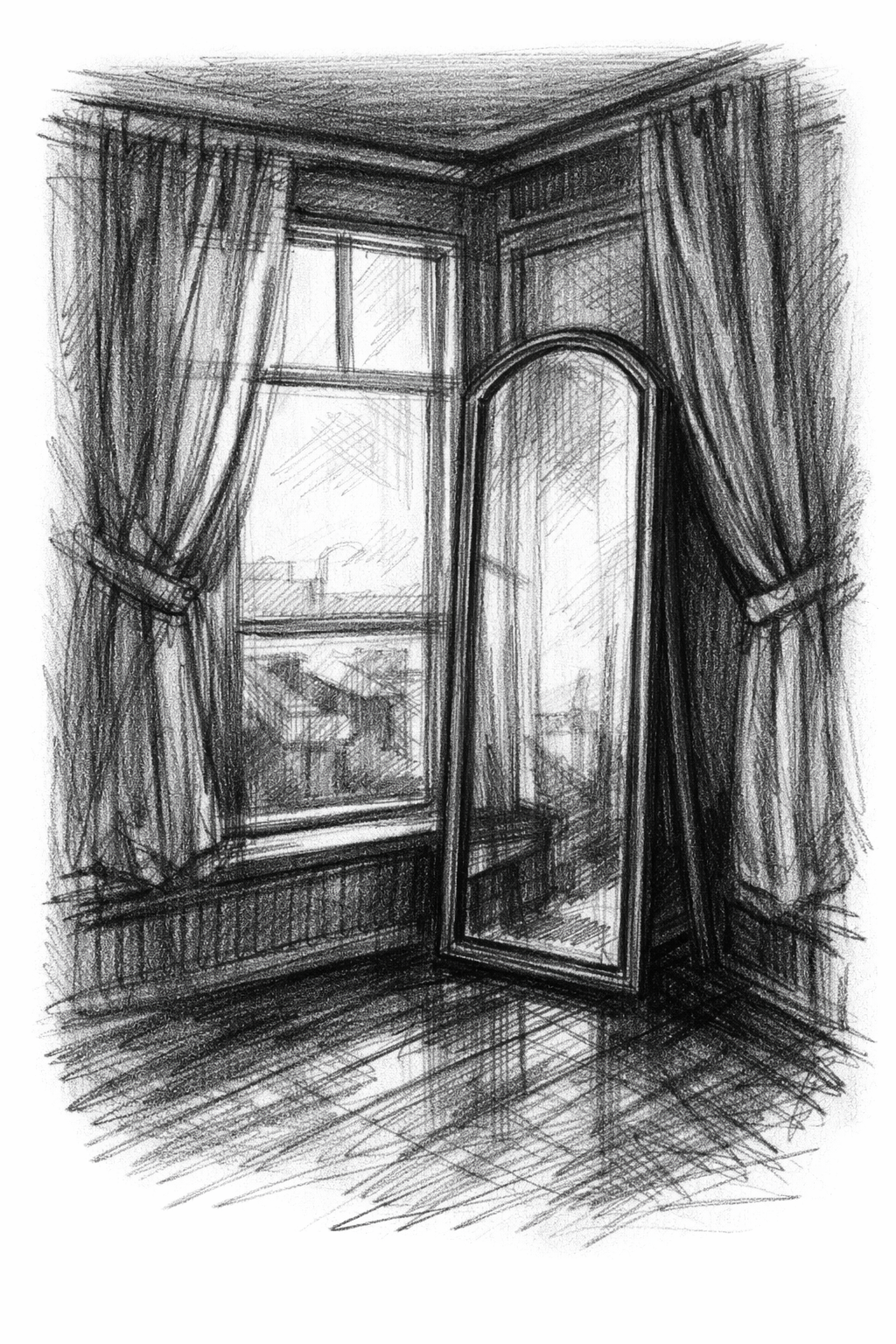
    After school she ordered me into her bedroom. Her room had a bay window and a full length mirror. The sky filled the glass. Soft clouds drifted across pale afternoon light.

    Even now that mirror and that sky remain fixed in my mind like a stain that cannot be removed.

    She told me to take my clothes off.

    This was not unusual. She often forced me to stand naked in front of the mirror while she mocked my body and humiliated me.

    But that afternoon something changed.

    Standing behind me she suddenly violated my body in a way that sent sharp pain through me. Tears filled my eyes but I could not scream. I could not cry. I had already learned those rules.

    You never question her.

    You never cry.

    You never talk back.

    By the time it ended I could barely stand.

    When I told her I was bleeding heavily she dismissed it as simply being late for my period.

    But something had changed in me forever.

    From that moment my fear of bleeding was born.

    It is not a trigger you can escape. Periods. Childbirth. Miscarriages. Medical procedures. Even conversations around women’s health can send waves of panic through my body.

    So every March my body remembers.

    Even when my mind tries to bury it.

    The pain in my abdomen returns.

    The anxiety doubles.

    Flashbacks arrive without warning.

    And the sky becomes a doorway back to that room.

    The pain of accepting that my own mother, the person who was meant to nurture and protect me, could inflict such horrific sexual and physical abuse sits on my chest like a life sentence. I have never once hurt my children. I have never even thought about raising a hand to them. Sometimes that makes the question even harder to carry. How can a mother look at her child and feel hatred instead of love? How can the one person who should celebrate your existence become the person who tries to break it?

    Right now it is 2.35pm and the school run is approaching.

    Soon I will have to open the door and step outside.

    I will look up at that same sky that holds so many secrets.

    I will collect my children from school.

    I will hold their hands.

    I will listen to their stories about ordinary things.

    Inside my chest the storm will still be there.

    But every year I do the same thing.

    I breathe.

    I step forward.

    I survive March.

    Again.

    And again.

    And again.

    Spring arrives for everyone else.

    For me, March is the month my body remembers.
  • I Learned To Sleep Facing The Door

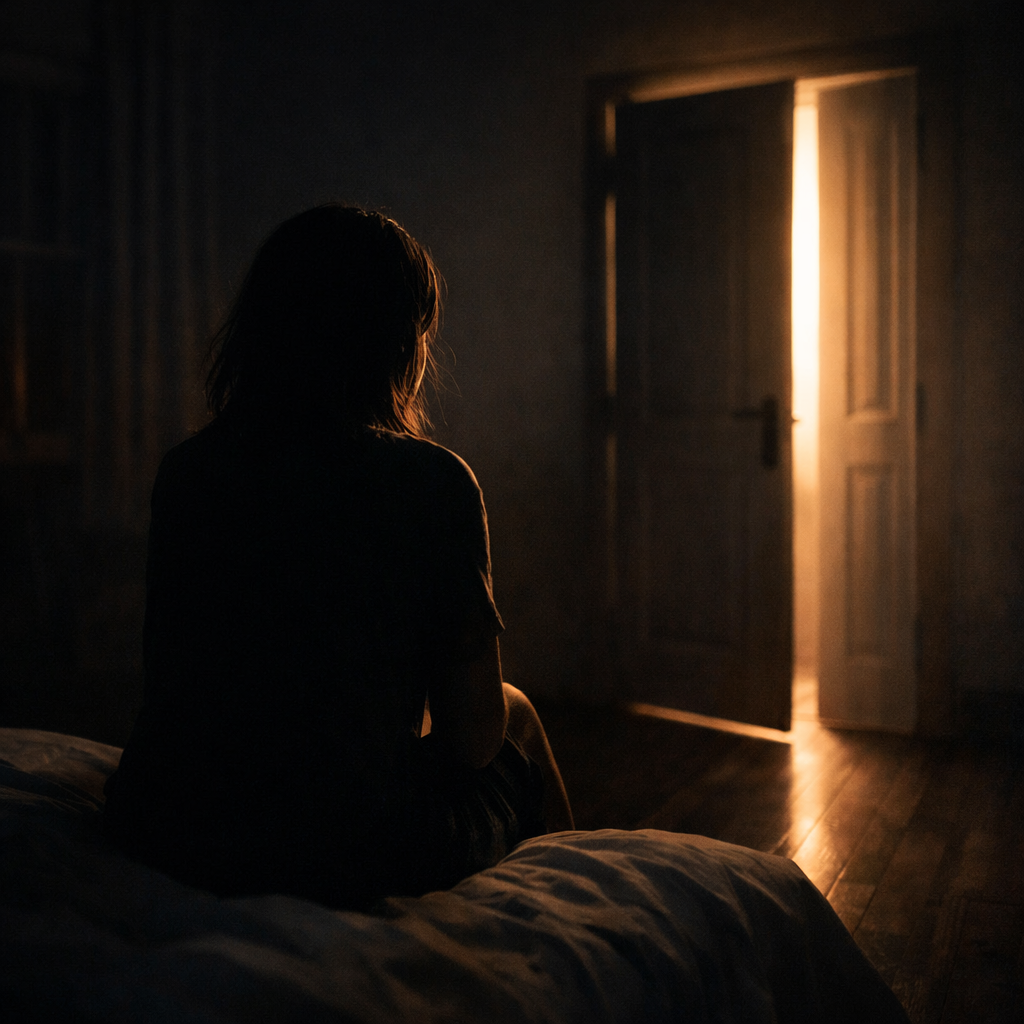
    I Learned To Sleep Facing The Door

    Trust did not shatter.

    It eroded.

    A grain at a time

    carried away by hands

    that said stay

    while quietly teaching me why I shouldn’t.

    People imagine betrayal as violence.

    They picture shouting.

    They picture rage.

    But the worst harm I have known

    arrived softly.

    It knew my history.

    Spoke gently around it.

    Waited patiently

    until I stopped guarding the fragile parts.

    That is how doors open.

    Not by force.

    By relief.

    I remember the first time I exhaled around someone.

    How heavy my bones felt

    realising I did not have to stay awake inside my own life.

    I thought safety sounded like laughter.

    I did not know it could also sound like goodbye.

    Now my body keeps score.

    I notice pauses between words.

    The shift in temperature when affection cools.

    The moment interest turns into tolerance.

    I collect these things instinctively.

    Evidence.

    Proof that I am not imagining the ground moving again.

    They say I am distant.

    Careful.

    Hard to reach.

    They do not understand

    that once you have been loved as a doorway

    people expect to walk through you forever.

    So I became a wall instead.

    Loneliness has sharp edges

    but at least it does not pretend to be soft.

    Sometimes I watch strangers trust each other.

    Heads leaning together.

    Phones left unlocked on tables.

    Sleep shared without fear.

    It feels like watching another language spoken fluently

    after forgetting every word yourself.

    I do not hate people.

    I still want warmth.

    That might be the cruelest part.

    Because wanting it

    does not mean I can survive it.

    So I sleep lightly now.

    Back to the wall.

    Breath measured.

    Dreams unfinished.

    And if someone ever truly meant no harm….

    I wonder

    if I would recognise it.

    Or mistake safety for danger…

    and close the door

    just before it finally stayed.

  • Living With A Body That Learned Too Much: This Is Not Just Anxiety

    Living With A Body That Learned Too Much: This Is Not Just Anxiety

    What looks like panic is often memory. What feels irrational has a history.

    This post contains personal reflections on anxiety and experiences of past trauma.

    Anxiety is cruel. One situation can keep me so terrified, so physically overwhelmed, that it feels like my world is ending. I reach a point where fear tips me toward insanity, where there is no relief. Not the kind people talk about, where deep breathing quiets the panic. My body does not respond to calm logic. The physical symptoms are immense, unlike anything I have ever experienced. It feels like I am dying, not peacefully, but violently, with relentless discomfort moving through every part of me.

    I want to beg for help. To throw my hands in the air and ask someone to take it away. But nothing does. Breathwork makes it worse. There is constant pressure on my throat, a sensation that my airway will close at any moment. It never has. Not yet. But anxiety doesn’t respond to reassurance, and tempting fate feels dangerous. If I lie down, it can ease. If I drink, it disappears, because my body finally relaxes.

    How do you explain to someone how completely anxiety consumes you? It takes over every moment, every thought. Nothing distracts from the sensations inside my body. They always come back to breathing. If I could breathe normally, it wouldn’t be so unbearable. But the moment my breathing changes, I become trapped inside it. Every inhale. Every exhale. My body fights itself. All I want is to feel normal. To breathe without thinking, the way other people seem to.

    Last week, my anxiety peaked.

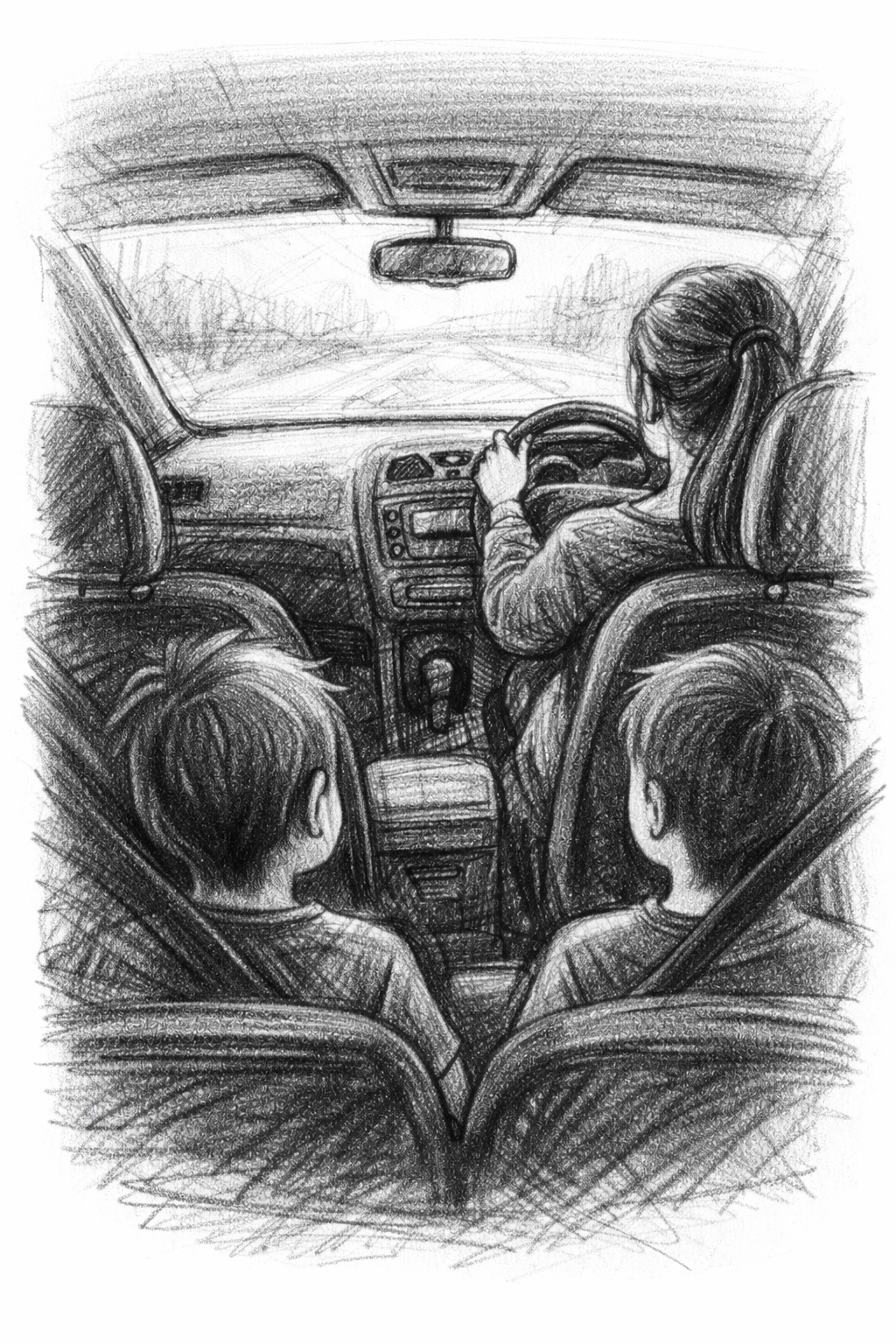
    My son paid for a weekend away for me and my four youngest children. He booked a lodge in the Lake District. It was a generous, loving gift. But it meant leaving the safety of my sitting room, and it meant driving for one hour and forty minutes. Driving triggers severe anxiety for me. The moment I see an open motorway, my body goes into uncontrolled panic. Not because I can’t drive. Not because I’m afraid of driving. I don’t know why getting into a car causes such extreme physical reactions.

    It starts with sweating, then dizziness, then difficulty swallowing. Panic builds because I can’t swallow, and the panic feeds itself. My throat feels like it’s closing. Maybe I haven’t been completely honest about why driving does this to me. Perhaps my first instinct is to disregard it. It is always easier to not understand what he reason why; realisation means facing head on the reality of the very difficult thoughts that already sit inside of you.

    When you’re behind the wheel, there is no escape. You can’t stand up. You can’t move around. You are stuck. Motorways make it worse, the monotony suffocating. Small towns offer brief relief.

    And then there is the deeper reason. The one my body remembers even when my mind tries to move on.

    I was eighteen. Still learning to drive. Still living at home. My dad taught me. Time alone with him was never safe. It was November, one of those damp, fog-heavy nights where mist clings to headlights that barely cut through the dark. It was my last lesson before my test two days later. He said it was my final chance to practise.

    The lesson itself was uneventful. My driving was perfect. It had to be. Perfection was demanded. Compliance was not optional. I focused only on doing everything right and getting home. If I passed my test, there would be no more lessons. Failure was not an option. The pressure was suffocating. My body numb with fear. Waves of terror crashing through me, the sensation of dying repeating again and again.

    When the lesson ended, all that remained was the drive home. The relief I was holding back felt unbearable. As we approached the roundabout that would take us directly home, the radio cut out. Radio 4. His station. Silence filled the car.

    “We’re going a different way,” he said. “Go straight over and follow my directions.”

    My stomach dropped.

    Soon we were on a dark single carriageway. No streetlights. Tall trees. No other cars. Fog dimming the headlights. He turned the radio off completely.

    “There’s a turn-off here. Pull in.”

    A muddy, hidden track. Isolated. He told me to turn the engine off.

    “Get out. Come round here.”

    They were commands. I had never disobeyed him. Fear made sure of that.

    He told me to lean over the front seat. I knew what was going to happen. As I leaned forward, my eyes fixed on the unopened condom beneath the handbrake. My trousers were unbuttoned, then pushed down to my ankles. Still, my gaze stayed on the wrapper. I did not look away.

    He reached under the seat and pulled out the metal steering wheel lock. His hand forced my legs apart. My body responded automatically, adjusting to accommodate him. There was no choice. You didn’t argue.

    The guilt of not fighting him lives alongside the trauma. But how do you stand up to the person who raised you, who terrified you, who was your father?

    The pain tore through me until it dulled. Not because I wanted it to, but because my body protected itself while my mind fractured. My body survived. My mind was violated. Flashbacks flooded in. What my mother did to me at fifteen. The same sensations. The same loss of self. My brain trapped me in a loop of pain.

    Eventually, it ended.

    As I pulled my trousers up, he called me back.

    “Look how much you enjoyed it.”

    Those words and the vision of what he held, embedded themselves deep inside me. They rewrote my reality. If he said I enjoyed it, did I? This is how trauma takes root. When the caregiver’s voice becomes truth because there is no one else.

    When we got home, he told me that if I didn’t pass my test, it would happen again.

    Next time, he said, it would be worse.

    Today, when my body panics in the driver’s seat, it is not weakness. It is memory. It is a nervous system that learned long ago that cars were not safe, that silence meant danger, that there was no escape once the engine was running. My body remembers what my mind spent years trying to bury.

    This is why anxiety is not “just anxiety.” It is not irrational. It is not drama. It is my body doing exactly what it was taught to do to survive. Every tight breath, every frozen moment, every overwhelming wave is rooted in something real.

    I am no longer eighteen. I am no longer trapped. I am not powerless, even when my body forgets that. I am a mother. I am present. I am safe now, even on the days my nervous system insists otherwise.

    Healing, for me, is not about erasing the past. It is about learning to live alongside it without being swallowed whole. Some days I manage that better than others. The trip away, the drive it was not an easy day for me. But I am here. I made the journey. I am still breathing.

    And that matters.

  • Complicit in Silence; The fear of being heard.

    Complicit in Silence; The fear of being heard.

    “Ring me,” they say. “Pick up the phone.”

    Those words scare me. No not scare. Scare is what a child feels about something that isn’t truly frightening, but is told to be.

    Those words make me feel physically sick with fear, right to the pit of my stomach. Fear. The most all consuming pain, the kind that stops me from even thinking about contacting someone, anyone.

    The thought of being a burden. The thought of someone having to spend time just listening to me. The thought of allowing anyone too close, close enough to see the mess that sits vaguely supervised in my head. I say vaguely supervised because I do try to keep myself checked, appropriate and sensible. My other fear is baring my soul, one so tormented and riddled with pain and desperation at times. Between the fear of asking for help and the fear of opening up too much, my brain has trapped me in a cycle of self loathing and fear of criticism for needing help, too much help.

    Years of not coping. The guilt of being too much. Resigned to a slow demise where my fear allows only small glimpses of the struggle that lives beyond the fragile orbit of control. And as I age, the need to be even less for others to deal with consumes me more.

    I cannot bother people. I cannot put myself onto others. They could be going through their own pain. To ask someone to help me fills me with unreasonable guilt that turns physical, anxiety and sickness at the thought that another human being would have to listen to me. I can’t. I won’t. It feels unfair.

    But silence is a trap. Silence keeps me complicit in alcohol. Silence keeps me complicit in hiding my voice about horrific things that were done to me, even when I downplay them to lessen the hurt. There is no self compassion. I reject the rhetoric of my parents, seen not heard, even being seen was dangerous.

    Someone told me a few weeks ago that a text was no good to her, she expects me to pick the phone up and speak. She didn’t say it to be cruel. She had good reason. She explained that hearing my voice means there’s no hiding. A voice can’t lie when the words “I’m ok” come out. She’d know if it was true or not. She knew me well enough, even from early interactions, and that filled me with fear. I don’t pick up the phone.

    Why. Why can’t I put into words how I’m feeling. There isn’t one reason, there are many.

    Childhood was never safe to express an opinion or show emotion. You listened and obeyed. There was no room to share feelings, no space for happiness or sadness.

    Childhood made me invalid. My opinions were invalid, and so were my needs. In eighteen years of living with my parents, nothing showed me I was a human being with normal emotions, feelings or desires. I was programmed to perform to their standards, their rules, their moral high ground. Fear ruled everything.

    It’s hard to describe the kind of control my parents had over me. It wasn’t even a matter of trying to object or question them. I didn’t dare. The consequences were unthinkable.

    One evening the phone rang. My mam’s hands were in dishwater, so she asked me to answer it.

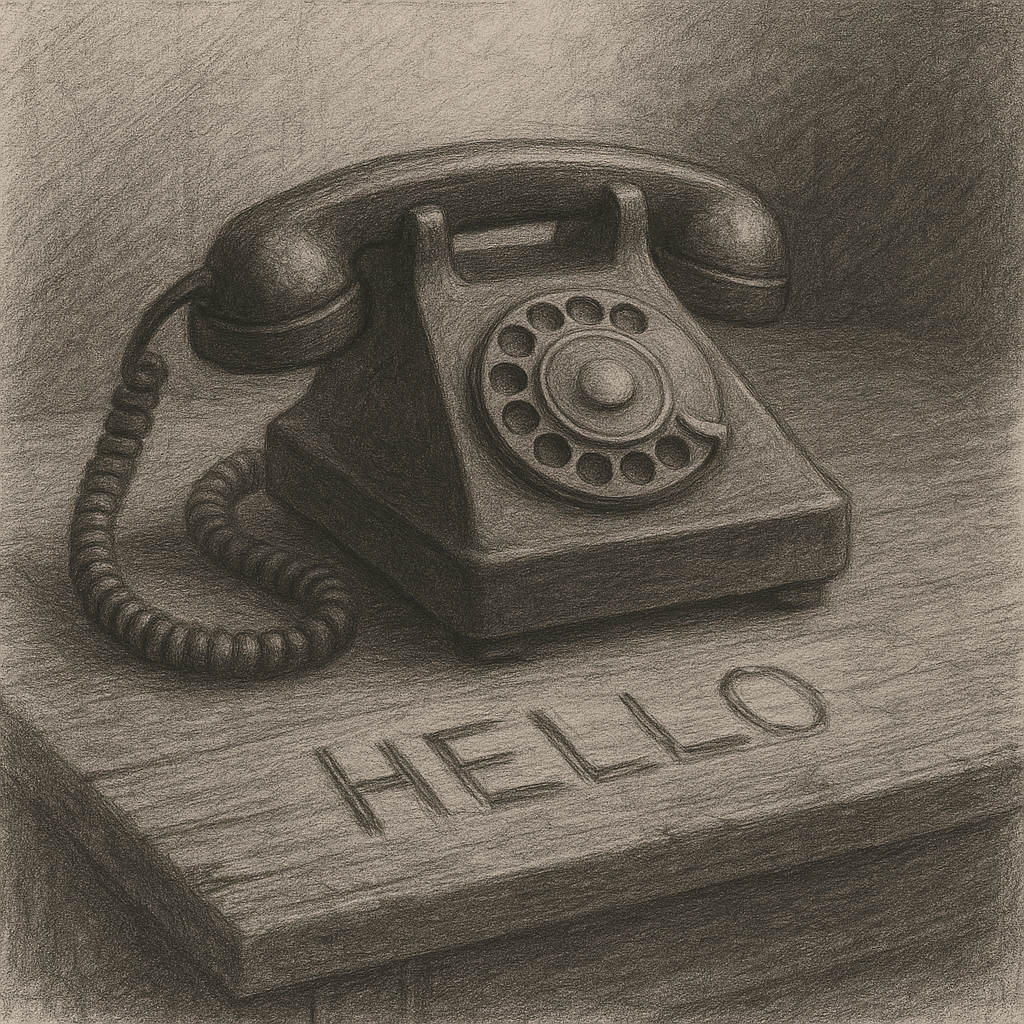
    Hello.

    Oh how I hate that one word. Hello caused me pain, upset, fear. All I said was hello, but the voice on the other end wasn’t as happy. My dad. He told me that the way I said hello was wrong, not good enough.

    Some background is needed for clarity. My mam was from near London, and I was expected to speak in her accent, with no trace of the North East in my voice, even though we were born and raised here. That evening, when my dad returned home, he informed me that the way I’d answered the phone was unacceptable, that I needed to be taught a lesson.

    My mam and dad took me to my dad’s office. They locked me in the conference room with a phone, taking turns to ring me. Each time I had to pick up and say hello in the “right” accent. My skin crawled, my fear rose. I couldn’t hear my mistake. I couldn’t see what I’d done wrong, yet they were never satisfied.

    Even now, I avoid answering phone calls whenever possible. The memories resurface, unforgiving. Their need for control went beyond my understanding. Perhaps it was never about how I said hello, but about their need to keep me conformed to the rhythm of their expectations and practices. What child would ever step outside such strict boundaries once fear had been placed in all the right places?

    Perhaps my parents kept me complicit in silence. It’s another thing I have to work on if I’m to rejoin society as a functioning adult. Yet breaking those cast iron chains feels futile at times. Maybe remorse keeps them partly in place, but above all, it’s fear, fear etched into my DNA. Not just the fear of upsetting them, but the fear of betraying them, of exposing what they did wrong. It’s as if they branded me, and any sign of wavering allegiance would invite instant reproach.

    I often recall one night, early hours of the morning, when I was no older than eight. The moon sat boldly on the other side of my drawn curtains. The night was cool, the chill in my room sent shivers down my spine. As the light hung proudly in the sky, watching over the sleeping, I sat up in bed and edged the curtains open to watch the moon.

    Tears came easily. I had woken, probably from another nightmare. I cried silently, or thought I had, but my sobs must have been heard. My mam came in, her voice clipped with habit and discipline. She asked what was wrong, but her words were more about ending the noise than hearing the pain.

    I replied with a weak nothing. She left me. But my sobs continued.

    There was no comfort from the two people who lay only metres away. They weren’t parents who offered love freely. There were no hugs, no gestures of kindness or understanding. My sobs irritated them, and I was dragged into the harsh brightness of the sitting room. The bulb burned my eyes, my heart, my head. The power of that light stunned me as I stood, head bowed as I always did in her presence. If my head stayed bowed, maybe she’d see respect, maybe she’d see obedience.

    A room full of feet, that’s all I saw. Their harsh words didn’t seem to go in, but on some level they must have, because if they hadn’t, maybe I would have learned to break free from the silence that still keeps me from asking for help.

    Mere minutes passed before my mam decided I was wasting their time. Back in bed, I leaned against the window sill and watched the moon, the one thing that offered light in the darkness, not just the darkness in the room but the deep web of darkness that filled my heart.

    There wasn’t even a longing to be loved. Just a hope that I wouldn’t feel so sad.

    Fear still sits where my voice should be. It waits in the space between messages I never send and calls I never make. I tell myself it’s easier to stay silent, that no one needs to hear me, but I know that’s the same lesson they taught me long ago. Silence made me complicit once. I don’t want it to win again. Maybe one day I’ll find the courage to call without fear, to let my voice exist without permission. For now, I sit with the echo of that little girl who learned that speaking was dangerous, and I try to remind her that it isn’t anymore. To pick up the phone and say the words please help me feels harder than breathing.