• Complicit in Silence; The fear of being heard.

    Complicit in Silence; The fear of being heard.

    “Ring me,” they say. “Pick up the phone.”

    Those words scare me. No not scare. Scare is what a child feels about something that isn’t truly frightening, but is told to be.

    Those words make me feel physically sick with fear, right to the pit of my stomach. Fear. The most all consuming pain, the kind that stops me from even thinking about contacting someone, anyone.

    The thought of being a burden. The thought of someone having to spend time just listening to me. The thought of allowing anyone too close, close enough to see the mess that sits vaguely supervised in my head. I say vaguely supervised because I do try to keep myself checked, appropriate and sensible. My other fear is baring my soul, one so tormented and riddled with pain and desperation at times. Between the fear of asking for help and the fear of opening up too much, my brain has trapped me in a cycle of self loathing and fear of criticism for needing help, too much help.

    Years of not coping. The guilt of being too much. Resigned to a slow demise where my fear allows only small glimpses of the struggle that lives beyond the fragile orbit of control. And as I age, the need to be even less for others to deal with consumes me more.

    I cannot bother people. I cannot put myself onto others. They could be going through their own pain. To ask someone to help me fills me with unreasonable guilt that turns physical, anxiety and sickness at the thought that another human being would have to listen to me. I can’t. I won’t. It feels unfair.

    But silence is a trap. Silence keeps me complicit in alcohol. Silence keeps me complicit in hiding my voice about horrific things that were done to me, even when I downplay them to lessen the hurt. There is no self compassion. I reject the rhetoric of my parents, seen not heard, even being seen was dangerous.

    Someone told me a few weeks ago that a text was no good to her, she expects me to pick the phone up and speak. She didn’t say it to be cruel. She had good reason. She explained that hearing my voice means there’s no hiding. A voice can’t lie when the words “I’m ok” come out. She’d know if it was true or not. She knew me well enough, even from early interactions, and that filled me with fear. I don’t pick up the phone.

    Why. Why can’t I put into words how I’m feeling. There isn’t one reason, there are many.

    Childhood was never safe to express an opinion or show emotion. You listened and obeyed. There was no room to share feelings, no space for happiness or sadness.

    Childhood made me invalid. My opinions were invalid, and so were my needs. In eighteen years of living with my parents, nothing showed me I was a human being with normal emotions, feelings or desires. I was programmed to perform to their standards, their rules, their moral high ground. Fear ruled everything.

    It’s hard to describe the kind of control my parents had over me. It wasn’t even a matter of trying to object or question them. I didn’t dare. The consequences were unthinkable.

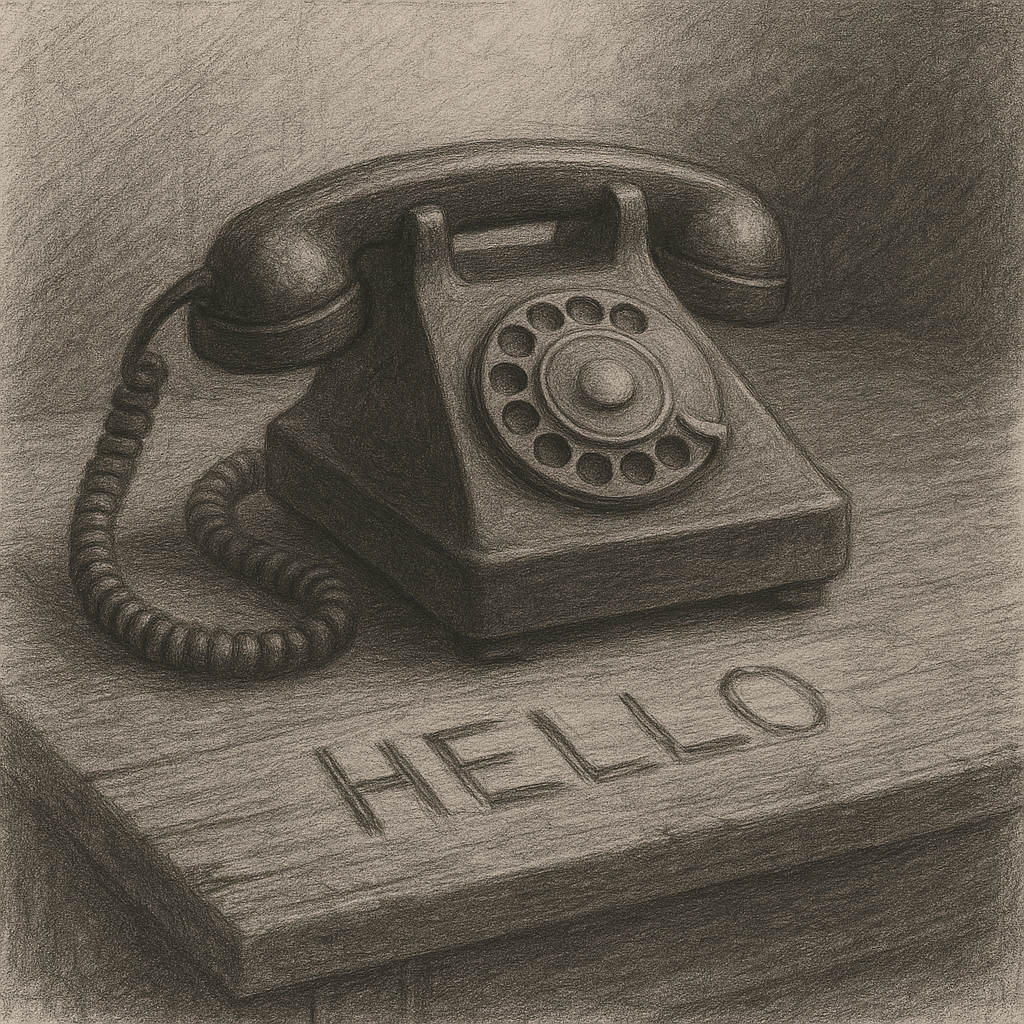
    One evening the phone rang. My mam’s hands were in dishwater, so she asked me to answer it.

    Hello.

    Oh how I hate that one word. Hello caused me pain, upset, fear. All I said was hello, but the voice on the other end wasn’t as happy. My dad. He told me that the way I said hello was wrong, not good enough.

    Some background is needed for clarity. My mam was from near London, and I was expected to speak in her accent, with no trace of the North East in my voice, even though we were born and raised here. That evening, when my dad returned home, he informed me that the way I’d answered the phone was unacceptable, that I needed to be taught a lesson.

    My mam and dad took me to my dad’s office. They locked me in the conference room with a phone, taking turns to ring me. Each time I had to pick up and say hello in the “right” accent. My skin crawled, my fear rose. I couldn’t hear my mistake. I couldn’t see what I’d done wrong, yet they were never satisfied.

    Even now, I avoid answering phone calls whenever possible. The memories resurface, unforgiving. Their need for control went beyond my understanding. Perhaps it was never about how I said hello, but about their need to keep me conformed to the rhythm of their expectations and practices. What child would ever step outside such strict boundaries once fear had been placed in all the right places?

    Perhaps my parents kept me complicit in silence. It’s another thing I have to work on if I’m to rejoin society as a functioning adult. Yet breaking those cast iron chains feels futile at times. Maybe remorse keeps them partly in place, but above all, it’s fear, fear etched into my DNA. Not just the fear of upsetting them, but the fear of betraying them, of exposing what they did wrong. It’s as if they branded me, and any sign of wavering allegiance would invite instant reproach.

    I often recall one night, early hours of the morning, when I was no older than eight. The moon sat boldly on the other side of my drawn curtains. The night was cool, the chill in my room sent shivers down my spine. As the light hung proudly in the sky, watching over the sleeping, I sat up in bed and edged the curtains open to watch the moon.

    Tears came easily. I had woken, probably from another nightmare. I cried silently, or thought I had, but my sobs must have been heard. My mam came in, her voice clipped with habit and discipline. She asked what was wrong, but her words were more about ending the noise than hearing the pain.

    I replied with a weak nothing. She left me. But my sobs continued.

    There was no comfort from the two people who lay only metres away. They weren’t parents who offered love freely. There were no hugs, no gestures of kindness or understanding. My sobs irritated them, and I was dragged into the harsh brightness of the sitting room. The bulb burned my eyes, my heart, my head. The power of that light stunned me as I stood, head bowed as I always did in her presence. If my head stayed bowed, maybe she’d see respect, maybe she’d see obedience.

    A room full of feet, that’s all I saw. Their harsh words didn’t seem to go in, but on some level they must have, because if they hadn’t, maybe I would have learned to break free from the silence that still keeps me from asking for help.

    Mere minutes passed before my mam decided I was wasting their time. Back in bed, I leaned against the window sill and watched the moon, the one thing that offered light in the darkness, not just the darkness in the room but the deep web of darkness that filled my heart.

    There wasn’t even a longing to be loved. Just a hope that I wouldn’t feel so sad.

    Fear still sits where my voice should be. It waits in the space between messages I never send and calls I never make. I tell myself it’s easier to stay silent, that no one needs to hear me, but I know that’s the same lesson they taught me long ago. Silence made me complicit once. I don’t want it to win again. Maybe one day I’ll find the courage to call without fear, to let my voice exist without permission. For now, I sit with the echo of that little girl who learned that speaking was dangerous, and I try to remind her that it isn’t anymore. To pick up the phone and say the words please help me feels harder than breathing.

  • When I Need To Be Held

    When I Need To Be Held

    a small confession about comfort and longing

    Alcohol still knows how to comfort me.

    It wraps around the ache,

    soft and familiar,

    like arms that don’t ask questions.

    It’s the only thing

    that feels like a hug

    when I’m falling apart.

    The warmth never lasts,

    it fades,

    leaving me hollow and heavy.

    But still,

    in the quiet that follows,

    beneath the guilt and the noise,

    one truth remains.

    I just want to be held.

  • When The Moon Returned

    When The Moon Returned

    Yesterday late afternoon, I found myself in the right place at the right time. I finally saw the moon again. It felt like a gift.  A small, glowing reward after three nights of empty skies.

    On Wednesday, I went to visit a friend at the coast. I told her we were going to walk along the front and see the moon. After some playful teasing, I redownloaded the planets app. We could find the moon’s position, but it seemed too low to see with the naked eye. It was still early evening and we were right at sea level, so I assumed it was hiding, waiting for the hours to pass.

    Later that night, my friend text me to say the moon was in its new phase; invisible for now. It made sense, but it still felt like a long time since I’d seen it. The moon, to me, is more than an object in the sky. It’s my grounded focus, my light when things feel dark, a place I find quiet sanctuary.

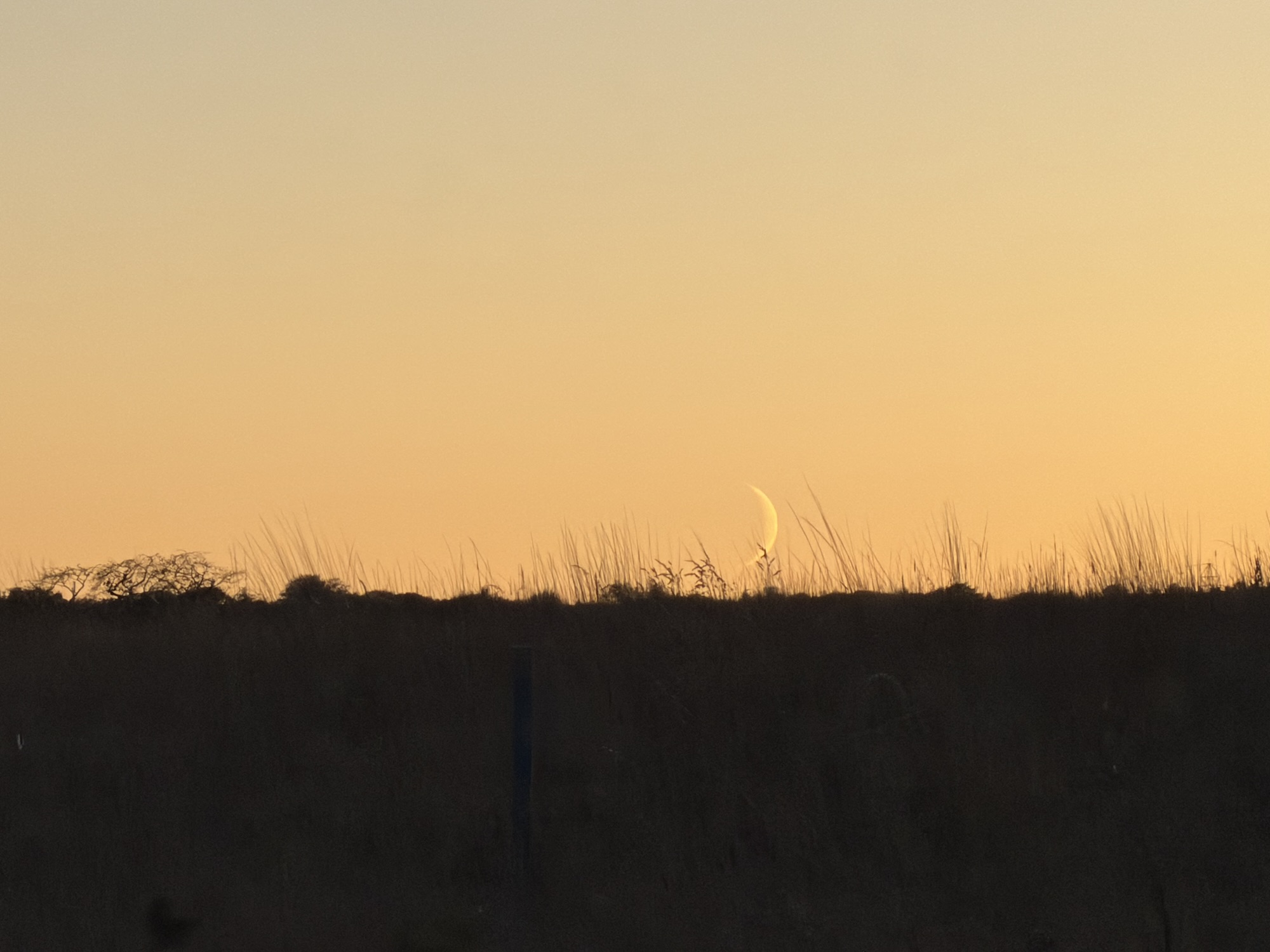
    Then on Saturday, as I pulled up by a field that stretched as far as my eyes could see, I noticed it.  A delicate waxing crescent hanging perfectly above the horizon. The stillness of that moment filled me with happiness. There’s something so peaceful about the moon’s calm presence, so constant, so sure of its place in the world.

    It offers hope, security, and quiet guidance. It doesn’t shout to be seen; it simply glows. Softly, steadily, beautifully.

    Tonight, I just wanted to share a few of the pictures I captured. The moon, in all its serenity, has a way of reminding me that even in the quietest moments, there is still light.

  • I Have A Confession

    I Have A Confession

    I have a confession to make.

    I’m actually quite scared to divulge this really quite petite fact that holds little significance in the grand scheme of things.

    But I need to make it less powerful, to reduce the imaginary pull that seems to reel me in to the hold it has on me.

    Under my desk is a bag, and inside the bag is a can of lager. The bag is covered with my blanket. It’s a safe space, one nobody in the house would dare to go near or touch, and I know this. The place was chosen to keep it safe, hidden by choice. If I had wanted it to be found, if I had wanted sanctuary from the mental battle currently engulfing me, I’d have put it in the fridge where everyone would see it.

    The deviousness of hiding it somewhere nobody goes is a choice. There is always a choice.

    That solitary can is my get out of jail free card. For me, it’s how I move around the board when everything becomes too impossible to handle or cope with. I’m still trying to decipher whether I’ve kept it as a deterrent, a safety net, perhaps; a reminder that the choice is there but I choose not to take it.

    Or whether it’s actually there as an emergency, like a defibrillator placed perfectly.  Just in case.

    Alcohol has become my “just in case.”

    It was my crutch. My reliance. But I’m tired of the monotony of drinking to excess and the downward regression into anxiety, pain, dread, and shame. Yet I’m also painfully aware of my inner need to survive, to survive to raise my children, to survive to simply exist. Alcohol, in a twisted way, allows me to survive.

    It destroys me, I know. My drinking crushes me. Mentally, it pulls me under. I isolate, I hide, I retract from a world that feels too loud and demanding.

    But the noise. The endless noise; it stops me from seeing clearly. Everything becomes blurry when I’m sober. I hear too much, feel too much, and my brain can’t keep up with the incessant waves of fear, panic, and expectation. Alcohol dulls it down.

    Because the withdrawal from society in active drinking gives me peace; but the withdrawal from alcohol in sobriety terrifies me.

    To others, it might look like oversensitivity.

    To me, it’s survival.

    I know alcohol won’t solve anything. I know it doesn’t fix the pain, but do they see me? Do they feel the ache that floods every nerve? Living hurts, and there’s no softer way to say it. The pain may change form, but it still exists. And it can be utterly debilitating.

    So this can of lager, this confession, I need to take the power out of it.

    Perhaps binning it would solve everything. But it would also take away my safety card, and sometimes, holding onto something, even the wrong thing, feels safer than letting go completely.

    I know my thinking is flawed.

    I know that the problem isn’t the can of lager. It’s me. My inability to cope without something that helps me to breathe through the pain.

    Because right now, I feel like I’m sinking, and there is no anchor.

    If this were anyone else, I’d know exactly what to say.

    I’d tell them tenderly that alcohol doesn’t heal pain; it only mutes it until it comes back screaming. I’d remind them that what they’re really reaching for isn’t the drink; it’s peace.

    But when it’s me, everything changes.

    Logic becomes fog. My own advice turns to whispers I can’t quite hear over the noise.

    Because I know what it’s like to sit in the dark, heart racing, eyes burning, wanting the world to stop spinning for just a moment. I know the exhaustion of surviving when every breath feels heavy.

    I know I’m damaged. I know I’m broken in ways that words can’t capture. I see it in my shaking hands, in the silence that follows my tears, in the way I pretend strength to protect those I love. Some days it feels like I’m hanging on by my fingernails  and they’re bleeding.

    That can under my desk isn’t just alcohol.

    It’s a symbol. A promise of escape. A threat dressed as comfort. A reminder that control is both my safety and my prison.

    I tell myself I keep it as a choice, that as long as it stays there, I hold the power. But maybe the truth is this; the real power lies in not reaching for it.

    Maybe one day I’ll throw it away. Maybe one day the pull will fade.

    But tonight, this confession, these words, are my first step.

    Because saying it out loud, admitting that it exists, that I exist like this, is me taking the power back, even if just for a moment.

  • The Last Fifty Minutes

    The Last Fifty Minutes

    Today, there’s a momentary pause while I try to find the words to do justice to something important, but also difficult to talk about. It feels as though the walls around me have closed in, suffocating the space, the air stifled by a heaviness. On Tuesday, my current therapy will come to an end. Eighteen months have passed, far from uneventful, but deeply significant. Mixed emotions consume most of my thoughts. The rational part of me always knew an end would come, yet there’s something about therapy that creates an illusion of timelessness. A space that feels almost TARDIS like, where time bends quietly in the background.

    Compiling these last eighteen months would be impossible; so much has transpired. But now, I need to write my gratitude, because my avoidant nature makes expressing it directly feel far scarier than setting it down in words. Sitting in that therapy room for my final session will be harder than any before. Harder, even, than the work itself.

    Most of all, I want to express my gratitude. Over the last twenty years, I’ve engaged in numerous stints of therapy with different therapists. Each has been wonderful in their own way, but this time has been the most enlightening and thorough of all. My therapist is, without question, gifted in her work. She has worked me harder than any before, with an attention to detail that reached into places I never thought could be seen. She gave me something rare, a safe space. And to feel safe, for me, is no small thing. It’s a testament to how comfortable she made me feel.

    Trust. Something I’ve struggled with all my life;  began to take shape in that room. For the first time, I could be completely honest about who I am, what I am, and all the pain I carry, knowing it would be met with respect and care. My biggest downfall in previous therapies was my inability to trust fully the well intentioned person sitting opposite me. I’d always withhold the most painful parts, desperate not to appear as destroyed as I felt inside.

    My inner thoughts have always scared me; saying them out loud has never come easily. If she had let me sit in silence for fifty minutes, I would have.  Content to let the session slip away without speaking. But she never allowed me to “just sit.” She invited me, gently and persistently, to voice the thoughts that hid in the corners of my silence. Together we unraveled so much unspoken pain and torment that had ruled my mind for so long.

    The end of therapy is making me sad. Is this normal? I’ve never felt such a pull of emotion at an ending before. They say people come into your life for a time, to help unravel and touch your world in ways that stay forever. And now, it must end. She has been a safety net, and from next week that will be gone. I’ll have to rely on the tools she’s helped me build, to hold myself steady through the storms. But I know that the absence of that reassuring, hypothetical hand on my shoulder, the silent reminder that I’m not alone, will be the hardest part.

    This week, the tears have come without warning. Mid walk, mid song, mid thought. It’s the knowing that therapy ends next week; that quiet fear of goodbye creeping in. For so long, those sessions have been my still point; a place where I could fall apart safely, and slowly learn how to put myself back together.

    Now, as the ending draws near, I find myself grieving the space, the rhythm, and the person who sat with me through it all. She’s offered such steady guidance and warmth, and I have a real fondness for her, not only for how she’s helped me heal, but for who she is. A genuinely lovely person who met me exactly where I was, time after time.

    I need to survive the final fifty minute session.

    I need to sit through it without falling apart; to hide the ache that comes with the conclusion of something that has opened so many doors to parts of myself I never knew how to see before.

    I tell myself I need to be dignified in my demise. To hold the emotion quietly, even as my chest tightens and my eyes betray me. Because how do you say goodbye to someone who helped you find your voice, when all you want to do is stay silent and stay a little longer.

  • When The Music Speaks

    When The Music Speaks

    Music… it makes my world go round.

    Silence scares me, and music fills that silence with something warm and poignant.

    It quiets the world just enough for me to breathe.

    Songs are powerful. They can unravel a person’s deepest thoughts in mere minutes. One of my favourite things is to ask someone what their favourite song is and just listen. You can learn so much from what you hear. The progression of a song tells a story, as though you’re walking beside them for a few minutes, sharing something deeply human.

    Music has always found me in the places words couldn’t reach. It soothes the noise inside my head or amplifies it until I finally hear what I’ve been trying to silence. Each song is a mirror, showing me where I am, who I am, and sometimes who I’m too afraid to be.

    It opens a door to a world where we don’t need to be alone. Through shared songs, we can communicate without barriers.

    Tonight I’ve been reflecting on the last few months. Next week, my eighteen month therapy comes to an end. I’ll write about that in more detail soon, but for now, I want to reflect through music. On the many places it has taken me. Because sometimes, when words fail, sound carries the message better than anything I could ever write.

    Music knows what to say when I can’t. Like this blog, it finds the spaces between my thoughts, the quiet, the ache, the pulse beneath what I never say out loud. It soothes, but it also stirs. Sometimes it feels like the only thing that truly understands the language of my emotions.

    During therapy, my playlist told my story before I could. It held up a mirror that didn’t lie. It echoed what I felt before I could name it. That’s why one song can make you cry and another can steady you. Some lyrics felt written for me, because in that moment, they were me.

    Therapy was never a straight line. Some days I climbed out of darkness; other days, I slid back down. But through every rise and fall, there was music. Always music. It reflected every phase of how I felt, the numbness, the anger, the heartbreak, the faint pulse of hope.

    From hundreds of songs, these are the ones that stayed. They became more than background noise; they became signposts of where I was when words couldn’t come. Some were loud and chaotic, others soft and steady. Healing doesn’t always roar. Sometimes it whispers, waiting for you to listen again.

    Uncomfortably Numb – Pink Floyd

    It began with numbness.

    The kind that feels heavy, as if your body is too much to carry. Therapy had started, but I was far from ready to feel. There’s a strange comfort in not feeling, it protects you, but it also isolates you. This song captured that perfectly. Existing but not living, breathing but detached. It wasn’t peace, it was absence. I was uncomfortable in stillness, desperate for something to move inside me, yet terrified of what it would mean when it did.

    Same Drugs – Chance The Rapper

    There’s a sadness that comes with watching everyone move forward while you stay frozen.

    It wasn’t about substances; it was about distance. People growing, healing, changing and me, still trying to catch up.

    I heard it and felt the ache of being left behind, of time passing without me. It’s a gentle song, but quietly devastating, like realising the world didn’t wait. It made me feel trapped in my own body, wishing someone could see me. A loss not just of others, but of the version of myself I hadn’t yet found.

    Glass House – MGK (feat. Naomi Wild)

    This one burned.

    It forced me to face the parts of myself I’d tried hardest to hide. The anger, guilt, and resentment I turned inward. I’ve never known how to be angry at anyone else; the rage always lands on me.

    Glass House shattered that mirror. It was messy, uncomfortable, but freeing. Sometimes anger isn’t destruction, it’s recognition.

    Sad Forever – Lauren Spencer Smith

    There were days when the sadness was so heavy it felt like breathing underwater.

    Sad Forever gave that feeling a voice. The trembling vocals, the raw honesty, it mirrored the exhaustion of never knowing if the pain will lift, or if it ever will.

    It reminded me that sadness isn’t weakness; it’s proof that I can still feel, even when I wish I couldn’t. Beneath the ache was a small flicker of hope. The belief that one day, maybe, it won’t hurt this much. It’s the moment in therapy when the tears come before the words do.

    Die Young – Chappell Roan

    This song hit me in the darkest place.

    For a long time, I believed I wouldn’t make it this far. Die Young reflected that. It’s haunting and beautiful, defiant and broken all at once.

    It was the song I played when I didn’t want to die but didn’t know how to live either. Even now, part of me still feels that pull, the whisper that it might be easier not to keep trying.

    But when I listen closely, I hear something else; the will to stay alive long enough to see what might change.

    Maybe living is rebellion. Maybe hope is hidden in the background of songs like this. Not loud, but waiting.

    When the music fades, I’m left with silence, but it no longer feels empty.

    These songs carried me through therapy. The numbness, the heartbreak, the anger, the exhaustion, and the fragile hope that followed.

    They were there for me when I didn’t know how to be there for myself.

  • The Quiet Fight Within

    The Quiet Fight Within

    I feel so fucking annoyed with myself.

    There’s no other way to begin;  this is the most self-critical thing I’ve ever written.

    Who am I?

    The truth is, I don’t really know.

    If fear could be diagnosed through a medical scan, I’d be admitted on the spot. My results would flash positive across every cell. There’s no overnight cure, no potion profound enough to heal the constant ache of not being enough. Not for others, but for myself. How do you fit into a world you don’t truly understand?

    Don’t get me wrong, I know how to act. I know social etiquette, when to speak, how to smile, how to make polite small talk. But beneath that? I’m lacking. Sub-par. I can hold conversations, talk about football, health, education, even genetics. If I don’t know something, I’ll go and find it out. And yet, put me in a new group and I crumble. I don’t want to be the loudest voice, or the one that commands the room. I just want to exist quietly, safely, without feeling like I’m a burden for simply being there.

    On Saturday afternoon, after a meal with eight others, I came home exhausted. Not the kind of tiredness you fix with sleep, but the kind that seeps into your bones. I realised I’m just not built for these situations. I wear isolation like a medal — polished, heavy, and familiar. I’ve perfected the art of retreating into my bubble, where nobody can disturb the fragile peace I’ve managed to create.

    Maybe sitting in that loud restaurant, surrounded by laughter, clinking glasses, and the smell of alcohol was a step too soon in recovery. My safety nets were gone. Every instinct screamed. Fear etched itself into my face while I tried to act normal. I’d taken off the blanket I usually hide under and this time I misplaced it completely. There was nothing to grab onto.

    The vulnerable part of me scanned for danger. Not because danger was there but because that’s what my nervous system has been trained to do.  To survive. Years of conditioning. Connection wasn’t safe, being seen meant being hurt or shamed. So even when nothing bad happened, my body braced as if it had.

    And then came the post-social crash.

    The spiral.

    That cruel voice that whispers. They think you’re weird. They don’t like you. You said too much. You said too little.

    That voice lives deep inside, built from years of rejection, fear, and pain. It’s not truth; it’s memory. A nervous system trying to interpret safety as threat because safety is unfamiliar. And I hate it. I hate how haunted I feel by things that no longer exist, ghosts of old wounds replaying themselves in new rooms.

    The doom that followed me home was heavy. It clung to everything.  To the laughter that should have felt light, to the meal that should have been enjoyable. I convinced myself I wasn’t good enough for the people I sat with, that I didn’t belong at that table.

    But here’s the quiet truth that crept in later.

    I did show up.

    Even through the noise in my head, through the chaos of a broken mind; I was there.

    And that counts for something.

    I’m learning now that the work isn’t about silencing the thoughts, but understanding them. Recognising where they come from, those old storms that taught me to flinch at love and brace for loss. I can’t stop the waves from rising, but maybe I can stop them from pulling me under.

    Some days, all I can do is steady my ship. Stand firm as the wind howls. Other days, I catch a glimpse of light breaking through the clouds. Small steps, one at a time. A path forming beneath me, uneven but mine.

    And maybe that’s what healing is.

    Not the absence of fear, but learning to move anyway.

    Toward a world where beautiful things can still happen. 

    Where not everything is dictated by pain.

  • When The Devil Holds You

    When The Devil Holds You

    Prim and proper. That phrase haunts me. It feels centuries old; something from a period drama where women never spoke out of turn. Yet it’s one my mam lived by. You didn’t ever stray from the structure. Behaviour was to be impeccable, and she never needed to ask or tell me; a look was enough to send surges of fear through me.

    My early years were defined by strict reprimands and heinous punishments. By the age of six, maybe seven, I knew my place well enough to be trusted never to put a foot wrong. Now, I see the hypocrisy in her ways; abiding by strictness, towing the line, yet her behaviour was far from ordinary.

    And this, I believe, is where my inability to ask for help began. Because of it, my current life feels compromised in more ways than I can count.

    I’ve now done four weeks in AA; thirty meetings in twenty-eight days. And still I’m afraid to come off the floor and share. This last week has been especially hard. Depression has kept me muted, and aside from attending meetings, I’ve wanted to be alone. That isn’t healthy.

    I’m reminded, don’t pick up that first drink. Ring someone. Speak to someone. Yet I’m too afraid, too scared. Fear compounded by a lifetime of hurt and control. It’s easy to say, “you’re not there anymore.” I know that. But while the rational part of my mind understands, the rest of me stays in high alert. Trauma cohabits my body.


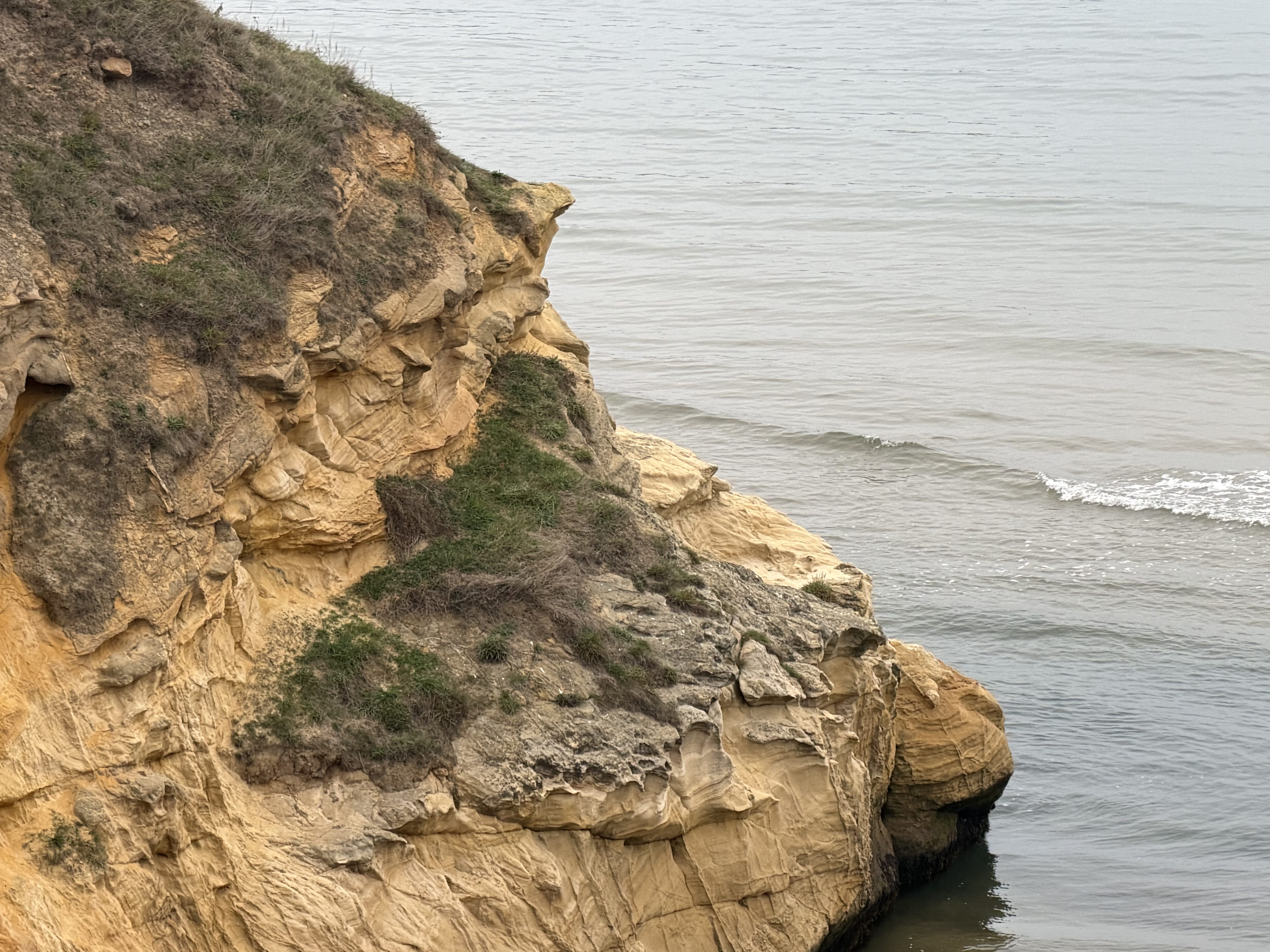
    As I move further away from alcohol as my crutch, I’m beginning to understand what that means. Trauma really does live inside me, controlling my behaviour in ways that still shock me. It doesn’t always roar; sometimes it just chips away quietly. Yesterday I stood looking at a small cliff edge carved and reshaped by the sea, and it struck me how much it mirrored the human body and mind. The constant pull, the relentless waves, they don’t destroy all at once, they erode slowly, year after year, until the shape that remains is something both fragile and fierce.

    But how do you remove years of condemnation, hatred, negativity, and physical pain? How do you learn to trust, when you’ve never had a safe example to follow? Learning to trust without ever seeing what trust looks like feels like a kamikaze exercise. Why would someone so deeply damaged ever risk it?

    Today spiralled quickly. By mid-afternoon I was scared; afraid of what I might do to myself. I’d already self-harmed, and the desire to hurt myself again pressed hard. That’s where my problems become even more difficult. I can’t pick up the phone to tell someone where my thoughts are taking me.

    There are days when words feel too small for the weight they’re meant to hold.
    I struggle to find the language to tell anyone just how hollow I feel.
    It’s easier to stay silent than risk feeling like too much, too heavy, too broken.

    My mam’s voice still lives in me. “No one will ever help you like your parents, never trust anyone.”
    She said it to keep me compliant, small, afraid.
    And though she was never someone I could trust with my safety, I learnt to cling to her anyway because when the devil holds you, it still feels like being held.

    My resolve eroded in those minutes, but with reluctance, I did ring the crisis team. Is it savage to resent that? My past experiences haven’t been positive, but I told myself, at least they’re paid to listen to my shit. That was the only grace that made me pick up the phone.

    Sitting outside my son’s school, I waited as the automated voice counted down the queue. In a way, I hoped I’d have to hang up before someone answered. But just as I moved to end the call, a woman’s voice came through. I spent ten minutes trying to form the jumble of emotions in my head into something that might make sense to a faceless stranger.

    To her credit, she was kind. She sounded genuinely caring and wanted me to speak to a nurse. The call ended with a promise that someone would ring me later in the day.

    The walk to pick up my six-year-old hurt. The responsibility, it mirrored the compliance of childhood. My children need me, and I’m bound by that. There’s no outlet to mess up. No room for mistakes.

    Whatever I’ve done to myself; be it self-harm or alcohol abuse, I’ve always done it quietly, still trying to be the perfect parent. The one who smiles through adversity and copes like everyone else seems to. Tied by responsibility and the fear of letting others down, I’ve forced myself to always show up for my kids. They go to school, to appointments, to everything they love. I have the patience of a saint. When they’re angry, I stay kind. When they’re naughty, I meet them at their level and we talk.

    My need to show up, to stop the legacy from repeating, means punishing myself with responsibility, leaving no space for personal mistakes. That’s become its own prison.

    Wiping my eyes for what feels like the millionth time over the years, I smiled the moment I saw my son. His innocence, his love for life, that’s when the guilt hits hardest. I am grateful. I’m blessed with beautiful children. But I’m also so very tired; mentally, physically, emotionally.

    To keep my son’s world intact, I ask about his day, and as his words wash over me, the pain sits dormant, not gone, just waiting. It’s dutiful. Subservient. My children come first. Even if that means I have to suffer.

    I’m trapped in responsibility. It’s simply not okay for me to quit. I can’t bear the thought of disappointing my children if I stopped being “Superwoman.” Showing vulnerability feels immoral, forbidden. Those patterns of childhood, people-pleasing, hiding pain, masking overwhelm, run through everything. I’ve become almost immortal to my own reality.

    The nurse did ring me back. I had to speak briefly, awkwardly, with my daughter beside me. Even though her understanding is limited, I hate exposing any part of my vulnerability in front of my children, so perhaps I didn’t express myself as clearly as I meant to.

    The outcome of that call confirmed what I already feared, that it wasn’t worth the stress of reaching out. The nurse told me I had to find better ways to cope because more bad things will happen in life, and what I was doing wouldn’t help.

    I admired his honesty. But will I call them again if I feel suicidal? No, never.

    Was I angry with him? Not really. I was angry with myself, for wasting his time, for having unhelpful coping strategies, for needing to reach out at all. My anger always turns inward. I’m angry because I’m not worth the fight.

    I’m angry because I’m not good enough. And though I’d never use the nurse’s tone or words, I understand why I feel like a drain on people’s reserves.

    So as that anger turned inward once more, I hurt myself again.

    It wasn’t strength, and it wasn’t weakness, it was survival, in the only way I knew. Not out of self-pity, but from a place I’m still trying to unlearn, the only kind of release I was ever taught.

    I’m not proud of it, but it’s not the end of the story either.

    This space isn’t about perfection. It’s about honesty; about finding the courage to sit with what hurts and still believe that something softer might grow from it. I used to think strength meant pretending it didn’t hurt. Now I know it’s allowing the ache to exist without letting it drown me. Trust still feels far away, but maybe that’s okay for now.

  • When The Words Wont Come

    When The Words Wont Come

    Where do you go when you can’t pick up the phone?

    When asking for help feels impossible, when it’s easier to curl up in a ball, crying and begging some unseen force to save you from a pain that no one can see or measure.

    How do you move past the deep unworthiness that sits inside, that lack of self-regard? Even if reaching out for help were possible, those professionals can’t fix me or cure me. That has to come from within.

    But even when every part of me wants to feel human, to live as others manage, to do the simple everyday things that are taken for granted, the pain swells through my body. The darkness creeps in, and before I know it, my whole being feels tormented. Tortured by fear, pain, loss, and a longing to belong somewhere in a world full of people.

    My favourite one-liners are “I’m ok” and “I’m fine.” I hide behind them as though they’re twenty-foot walls made of reinforced steel. The hurt hides behind my smile, the pain sinks beneath the laughter with friends. I throw myself into supporting others, being the shoulder to cry on, the hand to hold, the comfort in someone else’s despair. It’s easier to show up for others than to admit how drained I feel inside.

    Because the truth is, the life within me feels like it has been quietly draining away. That all too familiar feeling of severe depression looms again, ready to steal what little hope I have left.

    Tears come easily these days.

    Today, I went to see a potential home for my daughter, a supported-living place that on the surface seemed ideal. But the area held too many painful memories for me. And the thought of her moving away, of leaving the only family she’s ever known, broke me. The decisions I have to make rest so heavily on my shoulders.

    For context, my daughter is twenty-three. She has severe learning disabilities and autism. She cannot read or write, she needs one-to-one support all the time, has no awareness of danger, and needs to be kept safe. She lives at home with me and her brothers, but her attachment to me is so intense that she struggles to let anyone else close. She doesn’t tolerate her brothers being near me. They can’t sit on my chair, touch my phone or computer, or hug me. We live in a constant state of anxiety, fear, and stress. A move is urgently needed, but she’s my daughter. It has to be as positive as possible, and the transition will be so hard.

    Tonight, I sit here trying to find the words, but they feel out of reach. My creativity feels distant, like a friend who’s stopped answering the door. I’m left questioning myself again, wondering whether I still have something worth saying.

    Music has been my thin blanket tonight, fragile but comforting all the same. I’ve been listening to All I Ever Am by The Cure. Their music evokes so much emotion; it always seems to mirror exactly what I’m feeling, the struggle to find a sense of self. There’s a song for everything, every mood, every emotion. I speak to people through music. The power it holds is immense. Without it, I don’t think I’d survive. It’s the only thing that can lift me from a depth of no return.

    So tonight, I sat alone. Music playing, tears flowing. Somewhere deep inside, I wished the pain spreading through me would stop before it consumed everything. The thought of going on brought fresh tears, fresh pain.

    Another day.

    But we only ever have one day, today.

    Yesterday has already gone. Tomorrow hasn’t yet happened.

    Today is the beginning, not the end.

    And so, I write. Even through the doubts, even when the words feel small. I write in the hope that reflection might offer a little light. A flicker of something that still believes that maybe, just maybe, I can keep going.

    If you’re reading this and any of it feels familiar, please know you’re not alone. There is always someone willing to listen, even when it feels impossible to reach out.

    In the UK, you can call Samaritans on 116 123 (free, 24 hours a day), or text “SHOUT” to 85258 to message with someone who will listen quietly, without judgment.

    Sometimes the smallest act, a message, a word, a song, can keep the light alive a little longer.

  • I Didn’t Drink Tonight

    I Didn’t Drink Tonight

    It’s strange how the weather can hold so many memories within the mind. As easily as the soaking rain can drench you through, the way the sky looks, the smell of the air, and the way light glances across the horizon can pull you back into a place you thought you’d left behind.

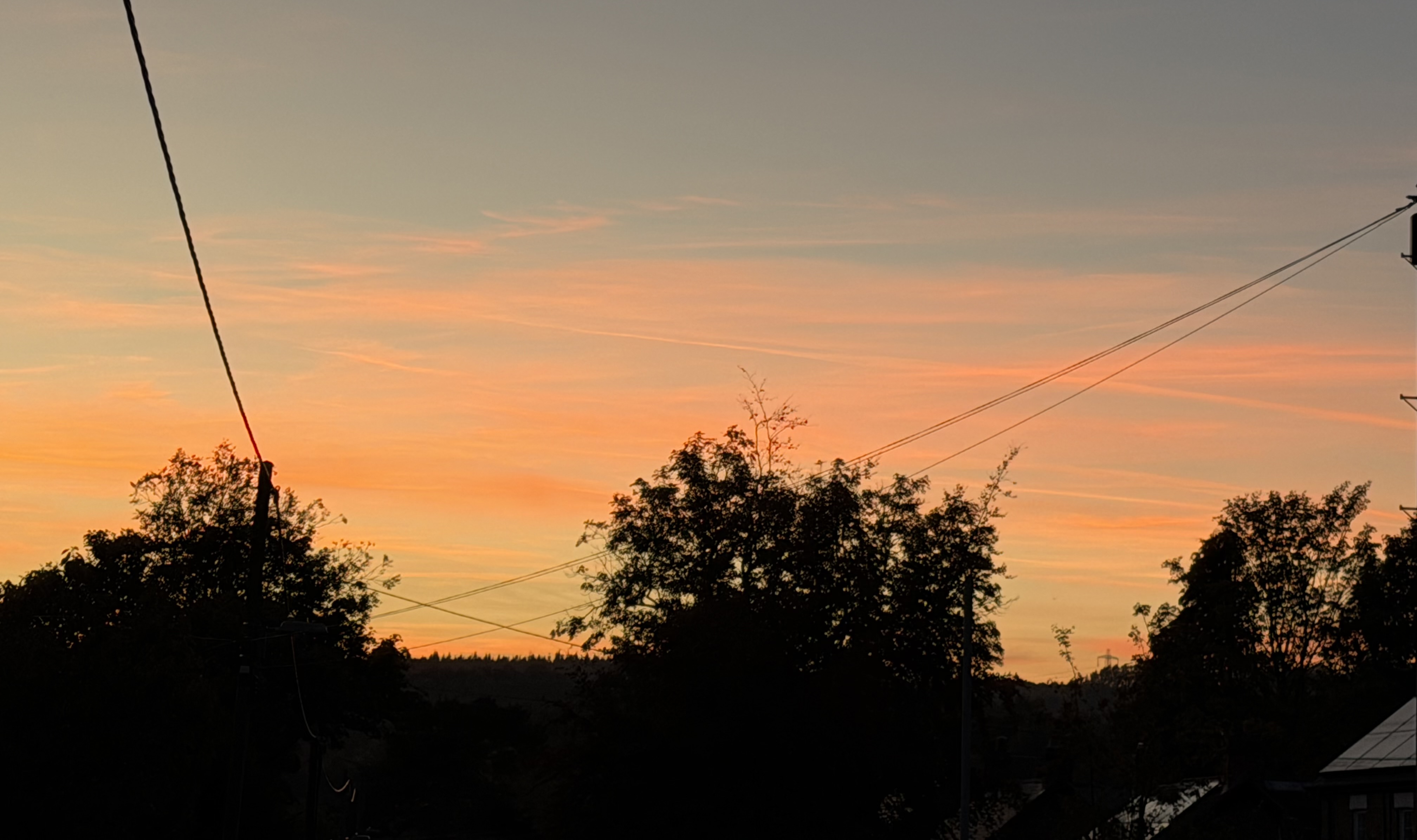
    This evening, the sun flowed red across the sky. A bright, fiery ball sat above the landscape as if it were watching over everything, shining its light across the last dregs of the day.

    But as I stood and watched the sunset tonight, sorrow filled my heart. The mid October chill that spread through the air clung to me, pushing my thoughts to another time. The temperature, the sun, the blueness of the sky, the way the clouds tinged with a threatening pink, it all brought back a flashback so intense, so untimely.

    Memories, even the darkest ones, have a way of resurfacing in the quiet moments of ordinary life. This evening was no different. It was mid October, the air cool, the sky heavy with fading light. I was twelve again. The sky looked the same as it did then, and that’s when it hit me, the first night my dad came to my room. Every year, around this time, the sunset brings it back.

    I remember standing at my window, looking through the thin net curtain, the world outside washed in that same pale orange light. The cool breeze that had found its way through my open window from that day brushed against my skin tonight as I watched the sky through the transparency of the trees. The imprint of the sky, an echo that ricochets through time. Then his voice behind me, low and certain: “This is all women are good for.” His breath warm against the back of my neck.

    Later I sat alone in the bathroom, the sun gone, shadows claiming the rooms. The sting, the blood, bright red against white tissue. I turned it toward the dim light, afraid to switch it on, afraid of being found. Fear kept me there, hostage to the dark.

    That night, I lost more than blood, more than tears. I lost something I could never reclaim, something I could never give again.

    And so tonight, the pain hit again, as it does almost every year since. In the past, I drank — drank to numb, drank to cope, drank to hide the shame. But tonight I didn’t. Tonight I stood firm. My sobriety needs to remain resolute, because without it, my healing will forever remain stuck in the shadows of the past.

    Tonight my heart is breaking. It aches in a way that words can barely reach. The memories, the longing, the exhaustion of holding it all together; it feels unbearable at times. There’s a part of me that still wants to numb it, to make it stop, to reach for the drink that always promised silence. But I know now that silence isn’t the same as peace. So I sit here, heart breaking, hands trembling, but still sober. Because even in this pain, I know it’s the only way through.

    So instead, I went to my cupboard. Piles of old books that I used to read to the kids sat peacefully, mismatched and waiting. Slowly, I went through each one, knowing what I was looking for, what I needed. Eventually, I found it. The book was still in perfect condition. Of all the stories, I’d always hated this one the most. The kids would ask for it, and my heart would sink. We’re Going on a Bear Hunt.

    The book that teaches you that you can’t go over it, and you can’t go under it; you have to go through it. To face the reality of those words while sober felt like one of the hardest things I will ever have to do. But tonight, instead of picking up a drink, I picked up a book and read it aloud, reminding myself of what must be done.

    Healing doesn’t come in waves of light or sudden moments of peace. It begins quietly, in the stillness of the same places that once held your pain. Tonight, I didn’t run or hide. I stood beneath a sunset that mirrored the worst night of my life and stayed there long enough to let it pass through me. Sometimes healing isn’t about forgetting; it’s about standing in the memory and choosing to live differently this time.