Tag: childhood abuse

  • Becoming The Mam I Never Had

    Becoming The Mam I Never Had

    How do you cope when you’re feeling down, when you’re beaten?

    It is not just emotional. It is biological. A lifetime of abuse by the people you should have been able to trust rewires the brain. It alters the body. It settles into your bones. It is not as easy as choosing positivity when your whole system has been taught danger before peace. My brain does not know how to rest. It knows how to survive. There is a difference.

    It is 6am. I have been lying here awake, trapped in a severe panic attack for two hours. I woke from a nightmare where I stood and watched myself being abused. It happens nightly, without fail. Uncontrollable nightmares. A fear of sleep. A fear of being awake. No real refuge in either. Daylight brings the exhaustion. Darkness brings the reliving. Some days it feels as though my own body is the place I am least safe.

    So I do what I always do. I throw myself into the kids.

    I keep moving. I keep answering. I keep showing up. I do things with them while my chest is tight and my breathing is shallow and my mind is somewhere between now and then. I keep going until I cannot anymore. Then I go to bed early, only to meet the part of the day I fear most. Because bed is not rest to me. It is not peace. It is the end of one battle and the beginning of another.

    Sleep does not come kindly. My brain will not switch off, as though it knows exactly what waits for me if it does. Vivid dreams. Violent memories. My body dragged back into moments it should never have known, when all it should be doing is recovering enough to face another day.

    I live for my kids. I simply do not have the energy to live for me. Every ounce of what I have, I pour into them. Every drop. It leaves the pot empty for myself, but to me that has always felt like the right choice. Because to have children is to hold a responsibility so enormous and so sacred that it should never be handled carelessly. Their needs matter. Their feelings matter. Their questions matter. And boy can they talk.

    They come to me as if I am a walking encyclopaedia, as if I hold the answers to everything. Their minds are curious and hungry and alive. They want to know, to talk, to be reassured, to be heard. And I give it. I give it all. Even when I am tired enough to disappear. Even when my own mind is screaming. Even when every part of me is running on empty.

    Perhaps I parent too much at times. Perhaps I hold myself to impossible standards. But the thought of not being that mam, even for a second, terrifies me. The thought of them ever feeling what I felt, of ever doubting they are safe, loved, heard, protected, is unbearable to me.

    Because I know exactly what it is to be a child and not have those things.

    I know what it is to grow up without softness. To live in a house where love was not something that wrapped around you, but something withheld, twisted, weaponised. I know what it is to be small and afraid and to learn, far too early, that home is not always where safety lives.

    So I made myself a promise somewhere along the way. My children would never have to earn warmth from me. They would never have to question whether they could come to me. They would never have to shrink themselves to survive my moods. They would never have to carry fear into bed at night because of me. I would become the parent I was never offered.

    And I have.

    But there is a cost to being everything for everyone when nobody ever taught you how to be anything for yourself.

    I give my all to them because they deserve it. I give myself nothing because somewhere deep down, some wounded part of me still believes I deserve that too.

    Yesterday was a hard day and it has bled into the early hours of today. That is the humiliating thing about complex PTSD. You can have a good day. A real one. Twenty four hours where the light feels possible again. And then suddenly it is gone, swallowed whole, as though it never belonged to you in the first place.

    On Tuesday I took two of my sons for a pub lunch. We laughed, played games, chatted. It was good, proper good. The kind of ordinary time that means everything. I told them how much I loved them, how amazing they are as people. I listened to them. Gave them space. Let them be seen. And while all of that was happening, while I was being the mam I so desperately want to be, I was also fighting an intense flashback rising in me like floodwater.

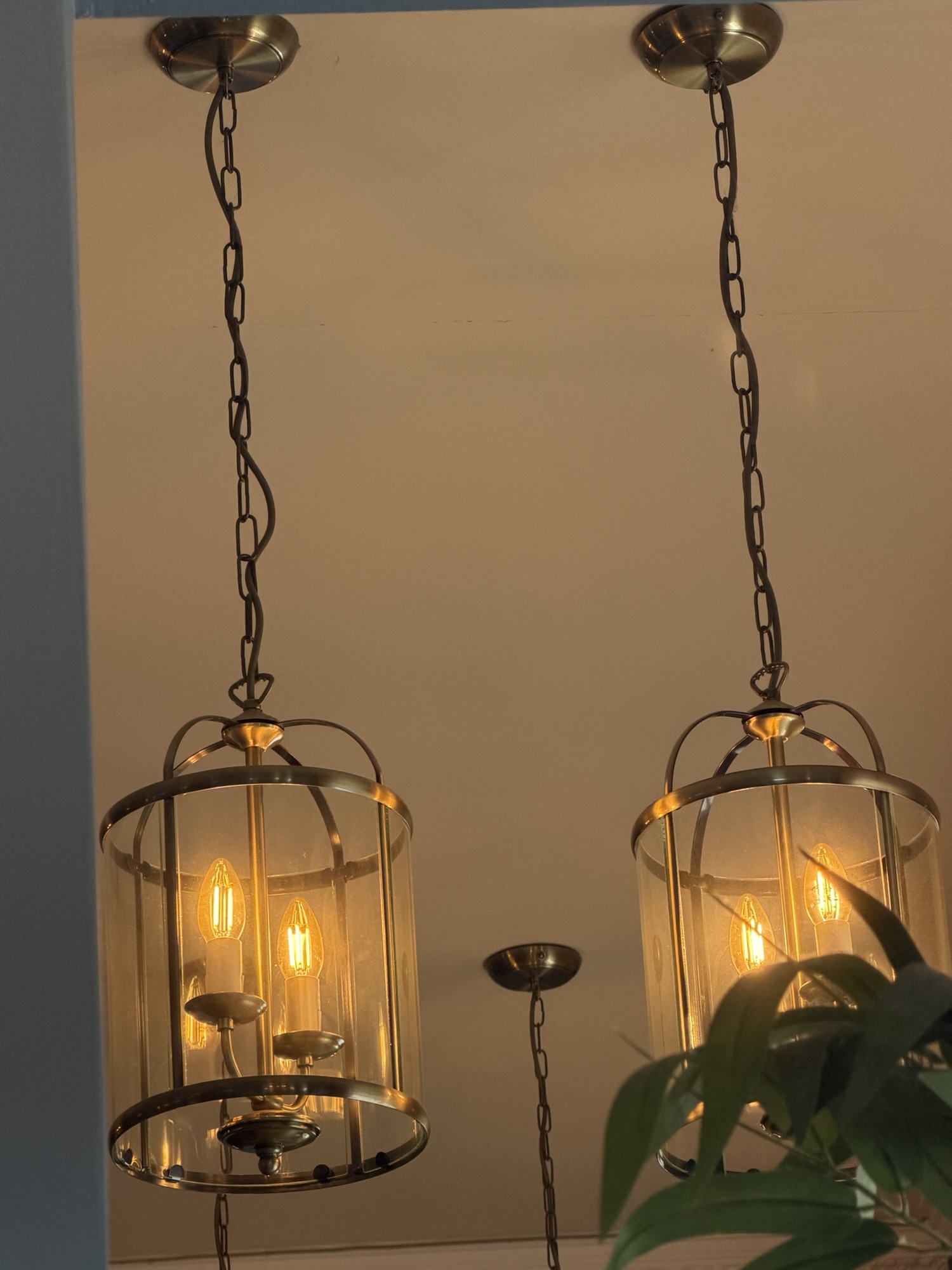
    I looked up and saw a light. An old fashioned light. I had seen one like it before, years ago. It hung in my parents dining room. The second my eyes landed on it, my body remembered before my mind had time to catch up.

    And just like that I was no longer sat at lunch with my boys. I was back there.

    Back in a room where my mam would burn me with her iron when she was feeling sadistic or angry. Back in a room where she would push me against her oak dresser. She loved heavy wooden furniture, the real solid kind, not the flimsy stuff. Furniture that bruised when your body met it. Furniture that held its place while I lost mine. Back in a room where she once made me sit for five hours while she told me how useless I was because my A level results had not been what they wanted. For five hours I listened to the same poison poured over me. That I was useless. A disgrace. A failure. A shameful daughter, she wished she didn’t have.

    I had not done brilliantly, no. But I had still passed. I could still go to university. It should have been enough. But those years at home were some of the hardest of my life. Abused almost daily by my dad. Abused several times a day by my mam. Every minute I spent at school was spent trying to work out how to run away, with very little hope of ever managing it. I did not know the world. I had been kept within my parents four walls for eighteen years, only ever allowed out for school. Running away was terrifying because I had nobody and knew nothing. I was naive in the way only imprisoned children are naive.

    The flashback did not loosen its grip. Words flew through my head. Images scorched behind my eyes. I drank faster to try to gain some kind of control, or perhaps to outrun what had already caught me. All the while I kept giving my children the opposite of what I had. Safety. Warmth. Attention. Regulation. Love that does not have to be earned. I will put on the brave face every single time if it means they get to feel secure. Even if I am falling apart inside, they will know steadiness. Even if it costs me dearly, they will know they are safe with me.

    That is the thing people do not always see. Survival does not always look like falling apart. Sometimes it looks like making the dinners, answering the questions, planning the days out, listening to every story, soothing every worry, all while your own body is screaming beneath the surface.

    Sometimes survival looks like becoming the exact parent you once needed, while grieving the fact nobody ever became that for you.

    And that grief is its own kind of exhaustion.

    So I ask again, how do you cope when the pain lives in your body as much as your mind?
  • When The Devil Holds You

    When The Devil Holds You

    Prim and proper. That phrase haunts me. It feels centuries old; something from a period drama where women never spoke out of turn. Yet it’s one my mam lived by. You didn’t ever stray from the structure. Behaviour was to be impeccable, and she never needed to ask or tell me; a look was enough to send surges of fear through me.

    My early years were defined by strict reprimands and heinous punishments. By the age of six, maybe seven, I knew my place well enough to be trusted never to put a foot wrong. Now, I see the hypocrisy in her ways; abiding by strictness, towing the line, yet her behaviour was far from ordinary.

    And this, I believe, is where my inability to ask for help began. Because of it, my current life feels compromised in more ways than I can count.

    I’ve now done four weeks in AA; thirty meetings in twenty-eight days. And still I’m afraid to come off the floor and share. This last week has been especially hard. Depression has kept me muted, and aside from attending meetings, I’ve wanted to be alone. That isn’t healthy.

    I’m reminded, don’t pick up that first drink. Ring someone. Speak to someone. Yet I’m too afraid, too scared. Fear compounded by a lifetime of hurt and control. It’s easy to say, “you’re not there anymore.” I know that. But while the rational part of my mind understands, the rest of me stays in high alert. Trauma cohabits my body.


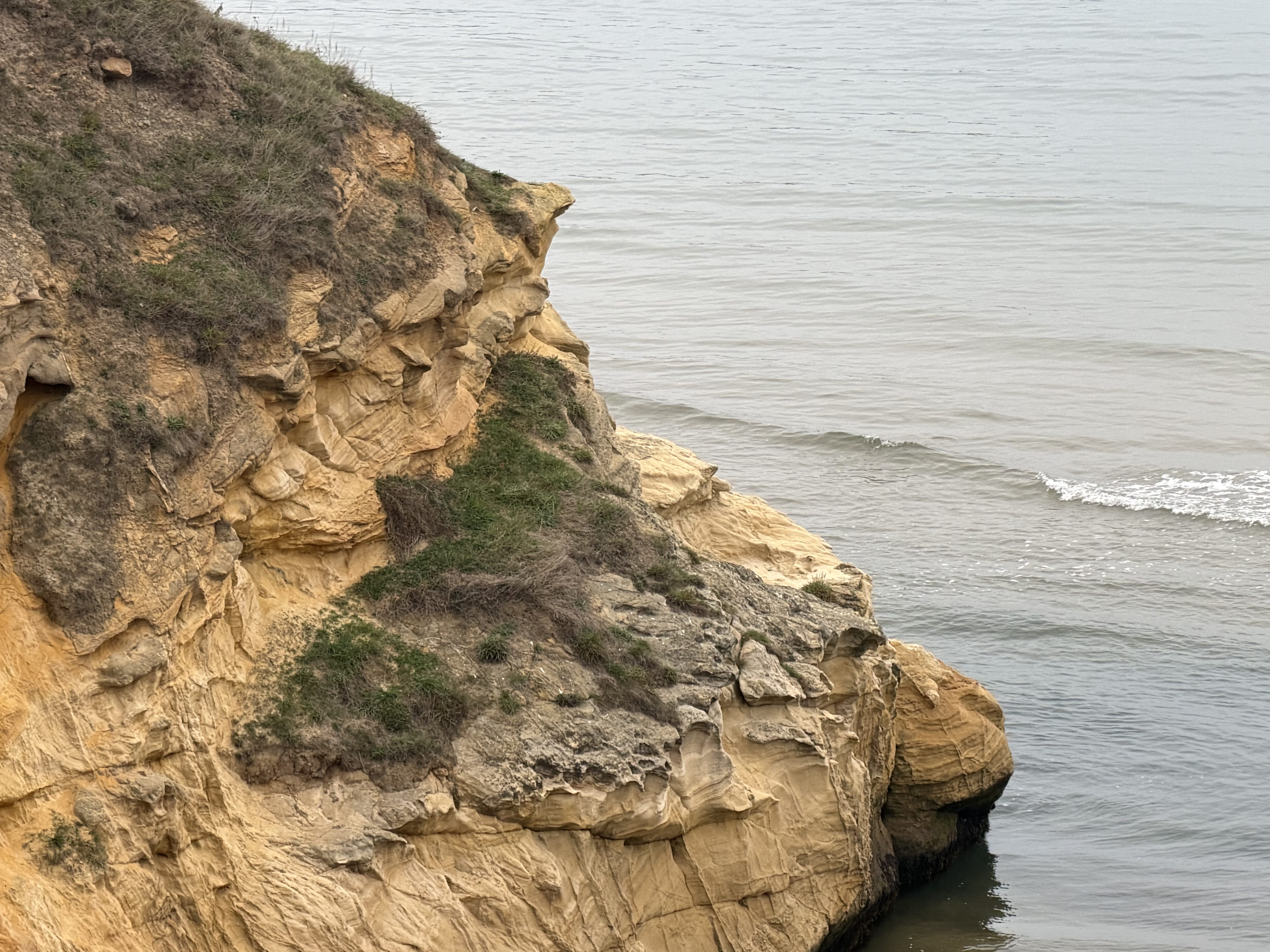
    As I move further away from alcohol as my crutch, I’m beginning to understand what that means. Trauma really does live inside me, controlling my behaviour in ways that still shock me. It doesn’t always roar; sometimes it just chips away quietly. Yesterday I stood looking at a small cliff edge carved and reshaped by the sea, and it struck me how much it mirrored the human body and mind. The constant pull, the relentless waves, they don’t destroy all at once, they erode slowly, year after year, until the shape that remains is something both fragile and fierce.

    But how do you remove years of condemnation, hatred, negativity, and physical pain? How do you learn to trust, when you’ve never had a safe example to follow? Learning to trust without ever seeing what trust looks like feels like a kamikaze exercise. Why would someone so deeply damaged ever risk it?

    Today spiralled quickly. By mid-afternoon I was scared; afraid of what I might do to myself. I’d already self-harmed, and the desire to hurt myself again pressed hard. That’s where my problems become even more difficult. I can’t pick up the phone to tell someone where my thoughts are taking me.

    There are days when words feel too small for the weight they’re meant to hold.
    I struggle to find the language to tell anyone just how hollow I feel.
    It’s easier to stay silent than risk feeling like too much, too heavy, too broken.

    My mam’s voice still lives in me. “No one will ever help you like your parents, never trust anyone.”
    She said it to keep me compliant, small, afraid.
    And though she was never someone I could trust with my safety, I learnt to cling to her anyway because when the devil holds you, it still feels like being held.

    My resolve eroded in those minutes, but with reluctance, I did ring the crisis team. Is it savage to resent that? My past experiences haven’t been positive, but I told myself, at least they’re paid to listen to my shit. That was the only grace that made me pick up the phone.

    Sitting outside my son’s school, I waited as the automated voice counted down the queue. In a way, I hoped I’d have to hang up before someone answered. But just as I moved to end the call, a woman’s voice came through. I spent ten minutes trying to form the jumble of emotions in my head into something that might make sense to a faceless stranger.

    To her credit, she was kind. She sounded genuinely caring and wanted me to speak to a nurse. The call ended with a promise that someone would ring me later in the day.

    The walk to pick up my six-year-old hurt. The responsibility, it mirrored the compliance of childhood. My children need me, and I’m bound by that. There’s no outlet to mess up. No room for mistakes.

    Whatever I’ve done to myself; be it self-harm or alcohol abuse, I’ve always done it quietly, still trying to be the perfect parent. The one who smiles through adversity and copes like everyone else seems to. Tied by responsibility and the fear of letting others down, I’ve forced myself to always show up for my kids. They go to school, to appointments, to everything they love. I have the patience of a saint. When they’re angry, I stay kind. When they’re naughty, I meet them at their level and we talk.

    My need to show up, to stop the legacy from repeating, means punishing myself with responsibility, leaving no space for personal mistakes. That’s become its own prison.

    Wiping my eyes for what feels like the millionth time over the years, I smiled the moment I saw my son. His innocence, his love for life, that’s when the guilt hits hardest. I am grateful. I’m blessed with beautiful children. But I’m also so very tired; mentally, physically, emotionally.

    To keep my son’s world intact, I ask about his day, and as his words wash over me, the pain sits dormant, not gone, just waiting. It’s dutiful. Subservient. My children come first. Even if that means I have to suffer.

    I’m trapped in responsibility. It’s simply not okay for me to quit. I can’t bear the thought of disappointing my children if I stopped being “Superwoman.” Showing vulnerability feels immoral, forbidden. Those patterns of childhood, people-pleasing, hiding pain, masking overwhelm, run through everything. I’ve become almost immortal to my own reality.

    The nurse did ring me back. I had to speak briefly, awkwardly, with my daughter beside me. Even though her understanding is limited, I hate exposing any part of my vulnerability in front of my children, so perhaps I didn’t express myself as clearly as I meant to.

    The outcome of that call confirmed what I already feared, that it wasn’t worth the stress of reaching out. The nurse told me I had to find better ways to cope because more bad things will happen in life, and what I was doing wouldn’t help.

    I admired his honesty. But will I call them again if I feel suicidal? No, never.

    Was I angry with him? Not really. I was angry with myself, for wasting his time, for having unhelpful coping strategies, for needing to reach out at all. My anger always turns inward. I’m angry because I’m not worth the fight.

    I’m angry because I’m not good enough. And though I’d never use the nurse’s tone or words, I understand why I feel like a drain on people’s reserves.

    So as that anger turned inward once more, I hurt myself again.

    It wasn’t strength, and it wasn’t weakness, it was survival, in the only way I knew. Not out of self-pity, but from a place I’m still trying to unlearn, the only kind of release I was ever taught.

    I’m not proud of it, but it’s not the end of the story either.

    This space isn’t about perfection. It’s about honesty; about finding the courage to sit with what hurts and still believe that something softer might grow from it. I used to think strength meant pretending it didn’t hurt. Now I know it’s allowing the ache to exist without letting it drown me. Trust still feels far away, but maybe that’s okay for now.