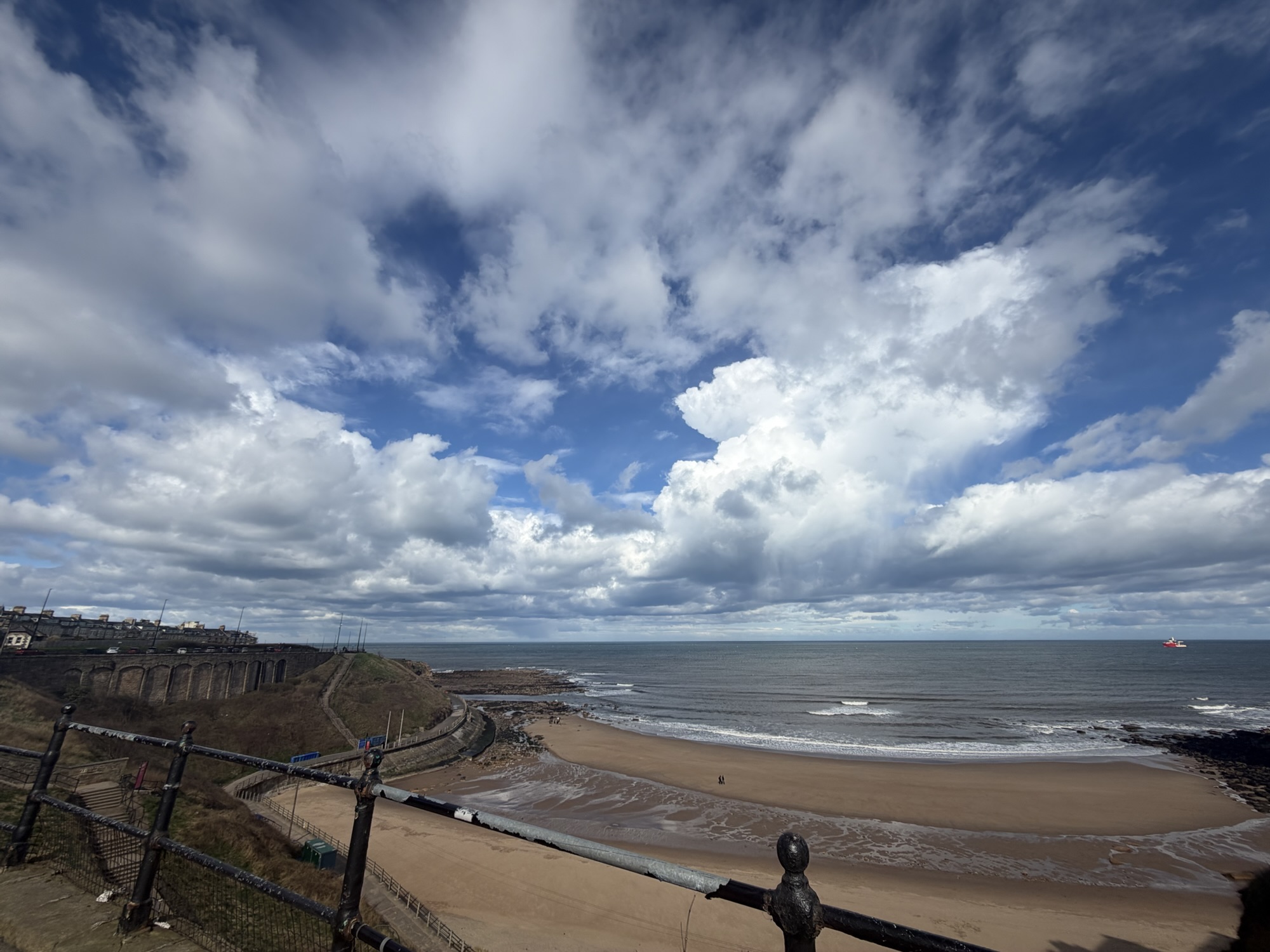
Some days sadness can cast a shadow out of the blue, as easily as a letter landing on the doormat.
Today was one of those days.
I hadn’t planned on writing for a couple of days. I have a blog scheduled for Wednesday, already written and waiting. But this afternoon, when I collected the post, there was one letter I opened straight away. NHS, in big letters across the front.
I am ashamed to admit I do not always open my post immediately. It fills me with hopeless anxiety. There is so much stress attached to envelopes and official words and unknown outcomes, and some days we have to pick our battles. But I sat on my bed and opened it, wondering what it could possibly be.
It only took a few lines for my heart to sink.
Dejection filled the very veins that, only moments earlier, had felt calmer than usual. For the last two days, I have had a small reprieve from the constant, 24/7 anxiety. It has still been there, sitting heavily in the background, but there have been brief glimpses of what life could look like if I wasn’t living inside severe panic all the time.
The letter was from a clinical psychologist within the ME/CFS rehabilitation and management team. My Long Covid referral had obviously been sent through. I had hoped, perhaps foolishly, that I might finally see someone who could help me begin to break down the walls of fear around medical tests. Someone who could help me work out what has been happening to my body since my Covid infection at Christmas 2022.
It has been over three years now.
Three years of daily symptoms that are, at times, so hard to bear. I am as certain as I can be that something changed in my nervous system during that infection. My vagus nerve, my body, my sense of safety, something was altered. And whatever the cause, the impact on my quality of life has been severe.
But as I read on, the letter painted a picture that became harder and harder to sit with.
The team had declined to see me because I am currently receiving treatment from NTAR, the local treatment and recovery team supporting me with my alcohol use. Their guidelines state that I need twelve months of stability after treatment before another referral can be made.
And today, that broke me.
It broke me into a million pieces when I already feel like I am struggling to hold the existing pieces together.
Please do not misunderstand me. I can see why the decision was made. I understand that services have guidelines. I understand that alcohol can complicate treatment, recovery, assessment and therapy. I understand that professionals have to look at risk, capacity, timing and stability.
I accept the decision.
But accepting something does not mean it does not hurt.
It does not mean the situation is simple.
It does not mean there is not a whole person behind the black and white line printed on the page.
I do not drink for pleasure. I do not drink to be big or clever. I do not drink because it feels like a free choice. I drink because I am trying to quieten emotional pain that, at times, feels too overwhelming to survive.
I hate that.
I hate that I rely on a substance to help me cope. I hate that alcohol has become a form of medication for pain it was never designed to treat.
But this is where the vicious circle lives.
I need extensive therapy to help heal some of what has happened to me, but therapy is not easily given when you are drinking. Yet part of the reason you drink is because you cannot cope without the very help that is being withheld until you stop.
Somewhere, a chain has to be broken.
And I know I have to play my part in that. I know I have to stop. I know I have to move away from needing alcohol to soften the pain that threatens to swallow me whole.
But I wish, sometimes, the question was less, “What is wrong with you?” and more, “What happened to you?”
Because trauma is not erased by diagnosis. It is not neatly filed away with a prescription. I take my medication every day, but it does not remove the visual flashbacks that arrive several times a day. My melatonin may help my body edge closer to sleep, but it does not take away the nightmares that come four, five, six times a night.
For years now, I have lived with flashbacks and horrific nightmares. Sleepless nights have stacked on top of each other because I am frightened of closing my eyes. Frightened of seeing the same things play out again, in different rooms, through different versions of myself.
Education does not eliminate those experiences.
Understanding does not numb them.
And alcohol, for all the damage it causes, has become the thing that makes the flashbacks quieter. The thing that makes the nightmares a little more bearable. The thing that gives my nervous system a pause, even while I know it is also keeping me trapped.
I am not someone who wants to tear systems apart for the sake of it. I do understand that services are stretched. I understand there are rules, limits, thresholds and risks. I understand that professionals are working within structures they did not personally create.
But still, parts of the system are broken.
I once had a psychiatrist tell me I had been failed my whole life. And while I do not say that as a defence for every choice I have made, I do think there is truth in it.
You are given therapy, and wherever you are when the timer runs out, it stops. There are no exceptions. No matter what has been opened. No matter what is still bleeding. No matter what has been stirred up and left floating around inside you.
It can feel like a one-size-fits-all approach to lives that have never been one size.
But I also understand the complexity.
How can a brain receive information, process it, and heal while it is continually being altered by alcohol? How can therapy do what it needs to do if the foundations are unstable? I understand why abstinence matters. I understand why safety matters.
So I am not angry.
I am not even annoyed.
I am just devastated.
Earlier this year, my GP told me to refer myself to Talking Therapies. I did. But because I experience suicidal ideation, they wrote back to my GP to say I could not access their service until those issues had been treated elsewhere. They also said further referrals would not be accepted until I had received the correct support.
Since then, I have not been referred into anything else. My melatonin has simply been increased.
And here I am again, standing inside the same repetitive cycle.
Something happens. I am wounded at the point of impact. The wind is punched out of me. I feel defeated before I have even had time to gather myself.
And then I want to turn to alcohol.
Because that is what I have taught myself to do. That is what my body reaches for when the pain is too loud.
But I know this is where something has to change.
I need to sit with the discomfort. I need to sit with the anguish that is currently tearing through me. I need to find a way to survive the feeling without immediately reaching for the thing that keeps me stuck.
That is not easy.
I am writing this in real time and the discomfort is etched across my face. Tears are rolling down my cheeks. I could text a friend, but the guilt of sharing my endless heaviness feels too much, so I sit here alone instead, letting the words come out because I do not know where else to put them.
In my last therapy, she begged me to keep reaching out for help.
She begged me to keep asking. To keep knocking on doors. To not disappear quietly into the belief that I am too much.
But I am always hesitant.
I do not want to be a burden to people. I do not want to be a burden to services. I do not want to take up space that I have convinced myself should belong to someone else. That is not me. I would rather shrink myself down, carry it alone, and pretend I am managing, even when I am not.
And maybe that is part of the problem too.
Because when you spend your life trying not to be burdensome, you learn to suffer politely. You learn to sit in crisis and call it coping. You learn to make your pain quieter, not because it hurts less, but because you are frightened of what it means to need too much.
There have been times I have rung the Samaritans. Times when the night has felt too heavy and I have needed another voice at the end of the line. And still, even then, guilt shadows it. The guilt of taking up space. The guilt of being heard. The guilt of placing my pain into another person’s evening, even when that is exactly what the service is there for.
Being heard is hard.
That is why I write.
Because at least here, on the page, I am not forcing myself into anyone’s life. I am not making someone answer the phone. I am not interrupting their day. I am simply placing the truth somewhere outside of myself and allowing people to meet it only if they choose to.
Writing gives my pain somewhere to go without making me feel quite so guilty for having it.
I fear I need my heart to be placed somewhere safe, but there never seems to be anywhere safe enough to put it.
In a perfect world, I would create that safety for myself. I would give myself the love I keep searching for in other places. I would believe I am enough simply because I exist.
But in my world, I need to believe I am enough before I can find a reason to love myself.
And that is where the difficulty sits.
In AA, they often say, “Let us love you until you can love yourself.”
And I do not think there is a truer set of words.
Because sometimes people cannot love themselves back to life alone. Sometimes they need to borrow belief from someone else. Sometimes they need another person to hold the light steady until their own hands stop shaking enough to carry it.
And I will be honest, because this space has always been built on honesty.
There are times I question whether living is the answer. Not because I want to die. I do not. But because the trajectory of the fight can feel so cruelly difficult. The constant pushing. The constant waiting. The constant being told to access help, only to be told I am too complex, too risky, too unstable, too something.
It wears you down.
It makes survival feel less like bravery and more like endurance.
But then my son will ring me and talk about some ridiculous new TikTok trend, like how many handshakes away from Epstein he is, and suddenly I am dragged back into the ordinary madness of motherhood. Back into laughter. Back into eye rolling. Back into the strange, chaotic little moments that remind me I am still needed.
And I am.
I am still needed.
I am needed to do the job I can, even if I cannot do it perfectly. I am needed to keep showing up for my children. To listen to their nonsense. To laugh at the things they find funny. To be mam, even when I am broken behind the smile.
So even when I question whether living is the answer, my children answer back in a thousand tiny ways.
Not loudly.
Not dramatically.
Just by needing me here.
But even this cannot last for long.
I have children. I have to put a front on. I have to keep it together. I have to smile and pretend, once again, that mam is fine. Destroying their world is not an option.
And as I had promised myself I would make a TikTok this week, this latest setback will probably impact that small thing too. It will deflect my plans because my resilience is flailing massively.
And I hate this about myself.
I have no problem pulling myself down and exposing all my flaws. In fact, it is easier to do that. It is easier to be downtrodden. It is easier to repeat the negative cycles because at least they are familiar.
And this is where I need to stop.
I need to wait.
I need to sit.
I need to accept the situation. To be understanding. To realise that my need to drink is inhibiting the progress I so desperately want to make.
It is not easy.
I am sitting here in real time with tears still on my face, trying to think of a plan. Not a perfect one. Not a dramatic one. Just one I can actually follow.
Tomorrow, I will message my key worker. I will ask what the next step is. I will ask whether they are willing to support me through detox safely. A psychiatrist has said hospital would be the safest option, but that feels impossible for me right now. And because that feels impossible, the process feels stuck.
But I cannot let stuck become the end of the story.
I need support that meets me where I am, not where a guideline wishes I could already be. I need to keep asking. I need to keep pushing. I need to keep telling the truth, even when the truth is messy, uncomfortable and hard to hear.
Today, a letter landed on my doormat and made my world feel smaller.
But maybe tomorrow, a message can be sent.
Maybe one small step can still be taken.
Maybe acceptance does not have to mean silence.
Maybe it can mean looking at the black and white line on the page and saying, “I understand the decision, but please do not forget there is a whole person standing behind it.”
So this evening, I sit with the sunset that messily tinged the horizon.
It was not perfect or neatly formed. The clouds and sun intertwined to create something beautiful, but edged. Something soft, but not untouched. Something glowing, but still carrying shadow.
And maybe that is fitting.

Because I am not ending today with answers. I am not ending it healed, fixed, referred, accepted or magically strong. I am ending it still hurting. Still unsure. Still trying to work out how to move forward from a few lines on a page that managed to knock the air from my chest.
But now I sit with dusk, my favourite time of day.
The quieting of the world around me makes me settle a little more. The noise lowers. The edges soften. The day loosens its grip.
And for now, that is enough.
Not fixed.
Not fine.
But here.
Still here.