What looks like panic is often memory. What feels irrational has a history.
This post contains personal reflections on anxiety and experiences of past trauma.
Anxiety is cruel. One situation can keep me so terrified, so physically overwhelmed, that it feels like my world is ending. I reach a point where fear tips me toward insanity, where there is no relief. Not the kind people talk about, where deep breathing quiets the panic. My body does not respond to calm logic. The physical symptoms are immense, unlike anything I have ever experienced. It feels like I am dying, not peacefully, but violently, with relentless discomfort moving through every part of me.
I want to beg for help. To throw my hands in the air and ask someone to take it away. But nothing does. Breathwork makes it worse. There is constant pressure on my throat, a sensation that my airway will close at any moment. It never has. Not yet. But anxiety doesn’t respond to reassurance, and tempting fate feels dangerous. If I lie down, it can ease. If I drink, it disappears, because my body finally relaxes.
How do you explain to someone how completely anxiety consumes you? It takes over every moment, every thought. Nothing distracts from the sensations inside my body. They always come back to breathing. If I could breathe normally, it wouldn’t be so unbearable. But the moment my breathing changes, I become trapped inside it. Every inhale. Every exhale. My body fights itself. All I want is to feel normal. To breathe without thinking, the way other people seem to.
Last week, my anxiety peaked.
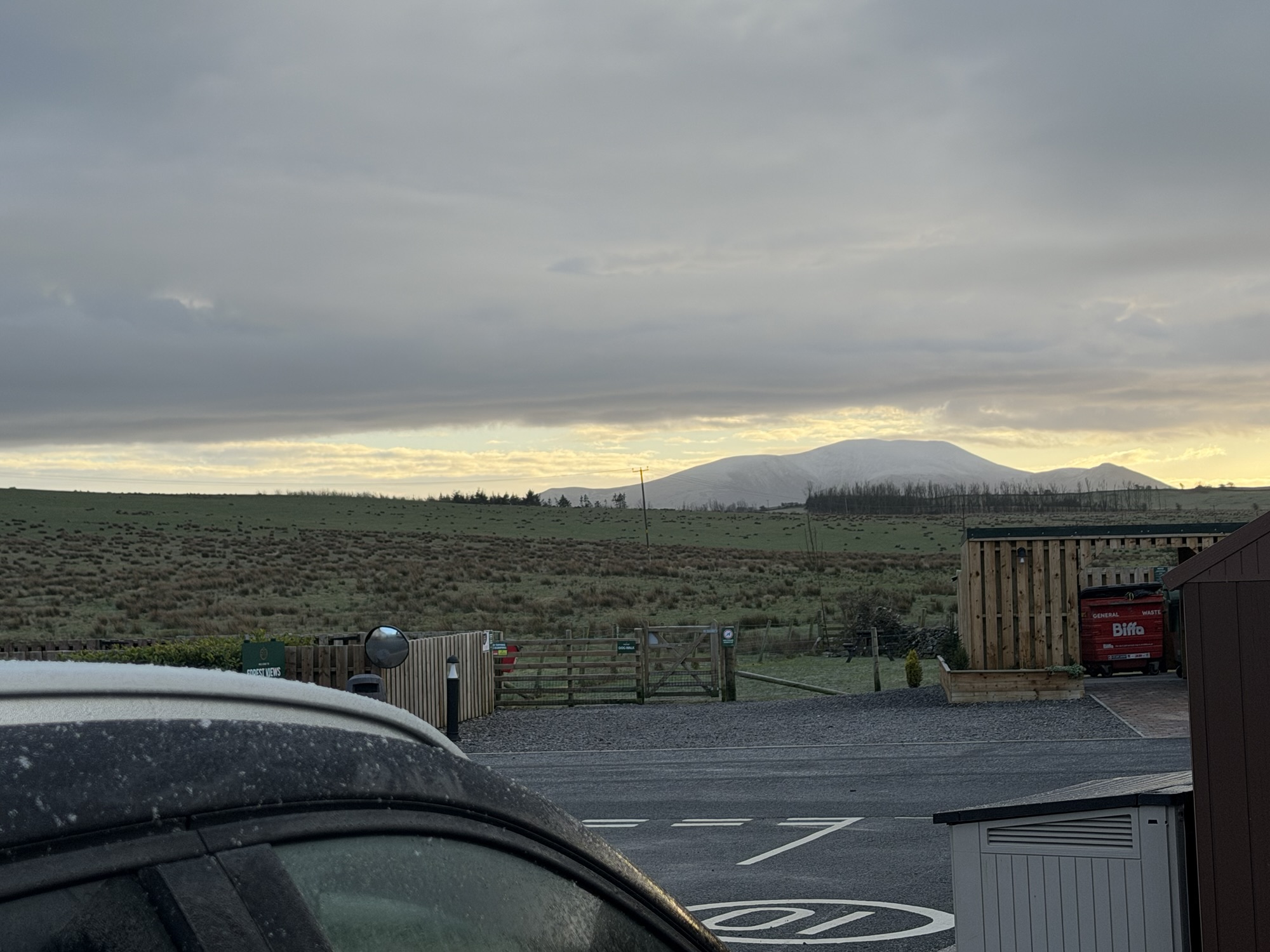
My son paid for a weekend away for me and my four youngest children. He booked a lodge in the Lake District. It was a generous, loving gift. But it meant leaving the safety of my sitting room, and it meant driving for one hour and forty minutes. Driving triggers severe anxiety for me. The moment I see an open motorway, my body goes into uncontrolled panic. Not because I can’t drive. Not because I’m afraid of driving. I don’t know why getting into a car causes such extreme physical reactions.
It starts with sweating, then dizziness, then difficulty swallowing. Panic builds because I can’t swallow, and the panic feeds itself. My throat feels like it’s closing. Maybe I haven’t been completely honest about why driving does this to me. Perhaps my first instinct is to disregard it. It is always easier to not understand what he reason why; realisation means facing head on the reality of the very difficult thoughts that already sit inside of you.
When you’re behind the wheel, there is no escape. You can’t stand up. You can’t move around. You are stuck. Motorways make it worse, the monotony suffocating. Small towns offer brief relief.
And then there is the deeper reason. The one my body remembers even when my mind tries to move on.
I was eighteen. Still learning to drive. Still living at home. My dad taught me. Time alone with him was never safe. It was November, one of those damp, fog-heavy nights where mist clings to headlights that barely cut through the dark. It was my last lesson before my test two days later. He said it was my final chance to practise.
The lesson itself was uneventful. My driving was perfect. It had to be. Perfection was demanded. Compliance was not optional. I focused only on doing everything right and getting home. If I passed my test, there would be no more lessons. Failure was not an option. The pressure was suffocating. My body numb with fear. Waves of terror crashing through me, the sensation of dying repeating again and again.
When the lesson ended, all that remained was the drive home. The relief I was holding back felt unbearable. As we approached the roundabout that would take us directly home, the radio cut out. Radio 4. His station. Silence filled the car.
“We’re going a different way,” he said. “Go straight over and follow my directions.”
My stomach dropped.
Soon we were on a dark single carriageway. No streetlights. Tall trees. No other cars. Fog dimming the headlights. He turned the radio off completely.
“There’s a turn-off here. Pull in.”
A muddy, hidden track. Isolated. He told me to turn the engine off.
“Get out. Come round here.”
They were commands. I had never disobeyed him. Fear made sure of that.
He told me to lean over the front seat. I knew what was going to happen. As I leaned forward, my eyes fixed on the unopened condom beneath the handbrake. My trousers were unbuttoned, then pushed down to my ankles. Still, my gaze stayed on the wrapper. I did not look away.
He reached under the seat and pulled out the metal steering wheel lock. His hand forced my legs apart. My body responded automatically, adjusting to accommodate him. There was no choice. You didn’t argue.
The guilt of not fighting him lives alongside the trauma. But how do you stand up to the person who raised you, who terrified you, who was your father?
The pain tore through me until it dulled. Not because I wanted it to, but because my body protected itself while my mind fractured. My body survived. My mind was violated. Flashbacks flooded in. What my mother did to me at fifteen. The same sensations. The same loss of self. My brain trapped me in a loop of pain.
Eventually, it ended.
As I pulled my trousers up, he called me back.
“Look how much you enjoyed it.”
Those words and the vision of what he held, embedded themselves deep inside me. They rewrote my reality. If he said I enjoyed it, did I? This is how trauma takes root. When the caregiver’s voice becomes truth because there is no one else.
When we got home, he told me that if I didn’t pass my test, it would happen again.
Next time, he said, it would be worse.
Today, when my body panics in the driver’s seat, it is not weakness. It is memory. It is a nervous system that learned long ago that cars were not safe, that silence meant danger, that there was no escape once the engine was running. My body remembers what my mind spent years trying to bury.
This is why anxiety is not “just anxiety.” It is not irrational. It is not drama. It is my body doing exactly what it was taught to do to survive. Every tight breath, every frozen moment, every overwhelming wave is rooted in something real.
I am no longer eighteen. I am no longer trapped. I am not powerless, even when my body forgets that. I am a mother. I am present. I am safe now, even on the days my nervous system insists otherwise.
Healing, for me, is not about erasing the past. It is about learning to live alongside it without being swallowed whole. Some days I manage that better than others. The trip away, the drive it was not an easy day for me. But I am here. I made the journey. I am still breathing.
And that matters.